














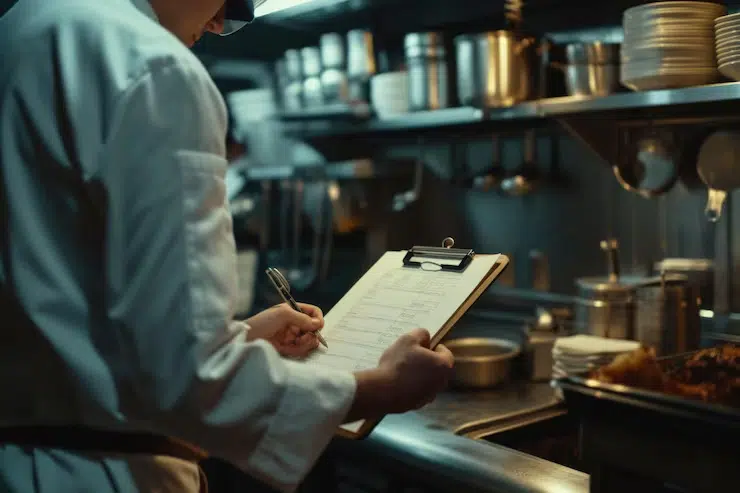
Imagine it’s the busiest Friday night of the year. Every table is full, tickets are flying in, and then — without warning — your commercial oven dies. The fryer follows. The entire kitchen grinds to a halt. Guests wait. Revenue evaporates. Your reputation takes a hit. This nightmare scenario plays out in restaurants around the world every single week, and in nearly every case, it was completely preventable.
A well-structured restaurant equipment maintenance checklist is the single most powerful tool a restaurant owner or kitchen manager can implement to avoid costly breakdowns, reduce operational downtime, and protect the investment they’ve made in their equipment. In the fast-paced world of food service, preventive maintenance isn’t optional — it’s a survival strategy.
Whether you run a high-volume restaurant, a boutique café, or a large catering operation, this comprehensive guide will walk you through everything you need to know about commercial kitchen maintenance — from daily tasks to annual deep-service schedules — so your kitchen stays running at peak performance, 365 days a year.
What Is a Restaurant Equipment Maintenance Checklist?
A restaurant equipment maintenance checklist is a structured, scheduled document that outlines all the inspection, cleaning, and servicing tasks required to keep commercial kitchen equipment in safe, efficient working order. It categorizes tasks by frequency — daily, weekly, monthly, quarterly, and annually — and assigns responsibility to specific team members or external technicians.
Unlike reactive maintenance (fixing things after they break), a kitchen equipment checklist is proactive. It’s designed to catch wear and tear before it becomes catastrophic failure, ensuring your operations run smoothly, your food stays safe, and your team stays productive.
Why Every Commercial Kitchen Needs One
• Prevents costly emergency repairs — Small issues caught early cost a fraction of emergency callouts
•Extends equipment lifespan — Properly maintained equipment lasts years longer
•Ensures food safety compliance — Many health code violations stem from poorly maintained equipment
• Reduces energy consumption — Clean, well-maintained equipment operates more efficiently
•Protects your staff — Faulty equipment is a serious safety hazard in a professional kitchen
A solid restaurant equipment maintenance checklist is not a luxury for large restaurant chains — it’s a fundamental operational necessity for any food service business.
Daily Restaurant Equipment Maintenance Checklist
Daily maintenance tasks are the foundation of any successful commercial kitchen maintenance program. These quick checks and cleaning routines take only minutes but can save hours of downtime and thousands in repair costs.
Cooking Equipment — Daily Checks
Ovens and Ranges
• Wipe down exterior surfaces after each service
• Remove and clean oven racks and burner grates
• Check ignition systems for proper function
• Inspect door seals and gaskets for signs of wear or cracks
• Clear any food debris from burner ports
Fryers
• Filter frying oil at least once daily (twice during heavy service)
• Check thermostat calibration — incorrect temperatures waste oil and compromise food quality
• Inspect heating elements for buildup
• Clean fryer baskets and drain valves
• Check for oil leaks around fittings
For consistent frying results, professional-grade cookware and cooking tools used alongside your fryers should also be inspected daily for warping, damage, or contamination.
👉 Shop Best Cooking Tools in UAE
Refrigeration — Daily Checks
• Check temperature readings against required safe ranges (0–4°C for fridges, -18°C or below for freezers)
• Inspect door gaskets for airtight seal
• Wipe down interior walls and shelving
• Clear condenser coils of surface dust
• Ensure food is stored with proper air circulation
Dishwashers — Daily Checks
• Clean filter baskets and spray arms
• Check detergent and rinse-aid dispenser levels
• Run a rinse cycle after final service to clear residue
• Inspect door gaskets and latches
Smallwares and Utensils — Daily
Don’t overlook your day-to-day tools in your restaurant equipment care routine. Inspect all utensils, cutting boards, and kitchen knives for damage, chips, or contamination daily.
👉 Shop Best Cutting Boards in UAE
👉 Shop Best Kitchen Knives in UAE
Weekly Restaurant Equipment Maintenance Checklist
Weekly tasks in your restaurant equipment maintenance checklist go deeper than daily routines, targeting components that need more thorough attention but don’t require daily intervention.
Deep Cleaning Schedules
Ovens and Ranges
• Remove and deep-clean oven interior using approved degreasers
• Descale burner components
• Check flue and ventilation pathways
• Inspect and tighten any loose fittings or connections
Ventilation Hoods and Filters
• Remove and wash grease filters in hot soapy water or commercial degreaser
• Check hood fan motors for unusual noise
• Wipe down hood surfaces to remove grease buildup
• Verify airflow is adequate — poor ventilation is a fire risk
Refrigeration Units
• Clean condenser coils thoroughly — dirty coils reduce efficiency by up to 30%
• Check drain pans and unclog drain lines
• Inspect evaporator fans for ice buildup
• Verify thermostat settings
Food Storage Equipment
Your GN containers, cambro boxes, and containers are the workhorses of food storage in any commercial kitchen. Weekly, inspect them for cracks, seal integrity, and proper labeling.
👉 Shop Best GN Containers in UAE
Kitchen Appliances — Weekly
• Clean external surfaces and vents on all countertop appliances
• Check cord integrity for cuts, fraying, or exposure
• Test all safety switches and auto-shutoff features
• Kitchen appliances should be tested for accurate temperature output weekly — miscalibrated equipment wastes energy and compromises food quality
👉 Shop Best Kitchen Appliances in UAE
Monthly Restaurant Equipment Maintenance Checklist
Monthly maintenance tasks in your restaurant equipment maintenance checklist are where you conduct thorough inspections of your most critical systems. These tasks often require some technical knowledge and may occasionally involve a professional technician.
Cooking Equipment — Monthly
• Have a qualified technician calibrate oven and range thermostats
• Inspect gas lines and connections for leaks — use approved leak detection solution
• Check pilot lights on gas equipment
• Inspect and clean broiler drip pans and heat deflectors
• Lubricate hinges, door springs, and mechanical parts with food-safe lubricant
Refrigeration — Monthly Deep Service
• Deep clean condenser coils with compressed air or professional coil cleaner
• Check refrigerant levels — call a technician if cooling performance has declined
• Inspect door hinges and adjust alignment if doors don’t seal properly
• Review temperature logs for anomalies that may indicate developing problems
Bakeware and Cookware Inspection
Monthly is a great time to do a thorough audit of your bakeware, cookware, saucepans, cooking pots, and frypans. Look for warping, rust, coating damage, and structural compromise that can impact cooking performance or food safety.
👉 Shop Best Cooking Pots in UAE
Front-of-House Equipment
Your guests’ experience starts with what they see and touch. Monthly inspect your tableware, cutlery, crockery, and glassware for chips, cracks, or damage that could be a safety hazard or harm your presentation.
Quarterly Restaurant Equipment Maintenance Checklist
Quarterly tasks in your preventive maintenance restaurant program address the deeper mechanical and structural health of your equipment. At this frequency, you’re looking at systems that wear slowly but can cause catastrophic failure if left unattended.
HVAC and Ventilation
• Professional inspection and cleaning of exhaust hoods and duct systems
• Replace air filters in HVAC units
• Inspect make-up air units for proper function
• Check fire suppression system for hood — clean nozzles and verify activation
Commercial Dishwashers and Glasswashers
• Descale entire wash tank with commercial descaling agent
• Inspect and replace door gaskets if worn
• Have a technician check water pressure, spray arm performance, and temperature
• Check detergent injection system calibration
Beverage Equipment
Quarterly service your beverage station. Your coffee accessories, barware, and related equipment need descaling, gasket inspection, and mechanical checks to deliver consistent quality.
👉 Shop Best Coffee Accessories in UAE
Buffet and Service Equipment
If you run buffet service, your buffetware needs quarterly inspection for heating element performance, fuel systems (for chafing dishes), and structural integrity. This includes ice wells, soup stations, and bain-maries.
Annual Restaurant Equipment Maintenance Checklist
Annual maintenance is the crown of your restaurant equipment maintenance checklist — a comprehensive, professional-level review of every major system in your commercial kitchen. Many of these tasks require certified technicians.
Full Equipment Audit
1. Engage a certified commercial kitchen maintenance company for a full inspection
2. Document all equipment with serial numbers, purchase dates, and service history
3. Evaluate equipment for upcoming replacement needs based on age and performance
4. Review energy consumption data and identify inefficiencies
5. Update your maintenance log and checklist based on any changes to equipment
Gas and Electrical Safety
• Full gas pressure and leak test by a certified gas engineer
• Electrical safety inspection — check for code compliance
• Test all emergency shutoffs
• Verify earth bonding on all commercial kitchen equipment
Refrigeration Deep Service
• Full refrigerant charge check and system pressure test
• Replace door gaskets on all units regardless of visible wear
• Service all fan motors — lubricate bearings and check current draw
• Inspect and clean all evaporator and condenser coils
Kitchen Accessories and Storage — Annual Audit
Annually, conduct a full audit of your kitchen accessories, including your ice scoops, storage containers, and all service tools. Replace any items showing wear, damage, or hygiene concerns.
👉 Shop Best Kitchen Accessories in UAE
Restaurant Equipment Maintenance Checklist: Comparison Table
Use this quick-reference table to understand what tasks belong at each service interval in your kitchen equipment checklist:
| Frequency | Key Tasks | Who Performs |
| Daily | Cleaning, temperature checks, visual inspections | Kitchen staff |
| Weekly | Deep cleaning, filter washing, coil wiping | Senior kitchen staff |
| Monthly | Calibration checks, gasket inspection, equipment audit | Manager + technician |
| Quarterly | Descaling, ventilation service, HVAC filters | Certified technician |
| Annually | Full safety audit, refrigerant checks, electrical inspection | Certified engineer |
How to Build Your Own Restaurant Equipment Maintenance Checklist
Creating a customized restaurant equipment maintenance checklist doesn’t have to be complicated. Follow these steps to build a system that works for your specific kitchen:
Step-by-Step Guide
6. Inventory all equipment — list every piece of equipment in your kitchen with model, age, and warranty status
7. Consult manufacturer manuals — each piece of equipment comes with specific maintenance guidelines; these are your baseline
8. Map tasks to frequency — assign each task a daily, weekly, monthly, quarterly, or annual frequency
9. Assign responsibility — identify who is responsible for each task
10. Create a tracking system — use a physical logbook, a shared digital spreadsheet, or dedicated maintenance software
11. Train your team — ensure all staff understand the checklist and their responsibilities
12. Review and update regularly — your checklist should evolve as equipment ages or is replaced
Pro Tips for Maintenance Success
• Keep records — Log every maintenance action with date, technician, and findings
• Stock spare parts — Keep commonly needed gaskets, filters, and fuses on hand
• Build technician relationships — Have a preferred service company you can call quickly
• Use visual aids — Post simplified checklists in the kitchen at each station
A strong preventive maintenance restaurant culture starts at the top. When management takes maintenance seriously, the team follows.
Common Restaurant Equipment Maintenance Mistakes to Avoid
Even experienced operators make mistakes in their commercial kitchen maintenance programs. Here are the most common pitfalls and how to avoid them:
Mistake 1: Skipping Daily Cleaning
Daily cleaning is the backbone of equipment longevity. Skipping it even occasionally allows grease, food particles, and mineral deposits to accumulate, leading to accelerated wear, fire risks, and hygiene failures.
Mistake 2: Ignoring Manufacturer Maintenance Schedules
Every piece of commercial kitchen equipment comes with a manufacturer-recommended restaurant equipment care schedule. Ignoring it often voids warranties and accelerates equipment failure.
Mistake 3: Using the Wrong Cleaning Products
Harsh, non-approved chemicals can corrode seals, damage coatings, and destroy sensitive components. Always use food-safe, equipment-appropriate cleaning solutions.
Mistake 4: Neglecting Smallwares
Operators often focus on large equipment and neglect smaller items. But worn cutting boards, dull knives, and cracked containers are just as much a food safety risk as a malfunctioning oven. Include all kitchen accessories in your maintenance routine.
Mistake 5: No Written Records
Without documentation, you have no history to reference when troubleshooting problems, planning replacements, or demonstrating compliance to health inspectors.
Frequently Asked Questions
1. What should be on a restaurant equipment maintenance checklist?
A restaurant equipment maintenance checklist should include daily cleaning tasks (surfaces, filters, fryers), weekly deep-cleaning schedules, monthly calibration and gasket checks, quarterly ventilation and descaling, and annual professional safety inspections covering gas, electrical, and refrigeration systems.
2. How often should commercial kitchen equipment be serviced?
Most commercial kitchen equipment requires daily cleaning, weekly deep maintenance, monthly professional checks, quarterly technical service, and a comprehensive annual inspection. High-use items like fryers and refrigerators may need more frequent attention.
3. What is preventive maintenance in a restaurant?
Preventive maintenance in a restaurant is a proactive approach to equipment upkeep that schedules regular inspections, cleaning, and servicing before problems occur — rather than waiting for breakdowns. It reduces costs, extends equipment life, and ensures food safety compliance.
4. How do I create a kitchen equipment checklist?
Start by inventorying all equipment, consulting manufacturer manuals for recommended maintenance intervals, categorizing tasks by frequency, assigning responsibilities to staff or technicians, and setting up a tracking system to log completed tasks.
5. Why is commercial kitchen maintenance important?
Commercial kitchen maintenance is critical for food safety, energy efficiency, equipment longevity, staff safety, and regulatory compliance. Poorly maintained equipment can lead to health code violations, costly repairs, and even kitchen fires.
6. What are the most important pieces of equipment to maintain in a commercial kitchen?
The most critical items include refrigeration units (food safety risk if they fail), cooking equipment (ovens, fryers, ranges), ventilation hoods (fire safety), dishwashers, and all food contact surfaces including cutting boards and utensils.
7. How often should fryer oil be changed?
Fryer oil should be filtered daily during use and fully replaced every 1–5 days depending on usage volume and food type. Fresh, clean oil produces better food quality, reduces fire risk, and extends fryer element life.
8. What is the best way to maintain commercial refrigeration?
Keep condenser coils clean, check door gaskets weekly, maintain proper temperature logs, ensure proper food loading for air circulation, and schedule professional refrigerant and mechanical checks annually.
9. Do kitchen knives need to be part of a maintenance checklist?
Yes. Sharp, undamaged kitchen knives are both a productivity and safety requirement. Include daily inspection and cleaning, regular sharpening schedules, and monthly assessment for chips or structural damage.
10. How do I maintain restaurant cookware properly?
Restaurant equipment care for cookware includes cleaning after every use, avoiding abrasive scrubbers on coated surfaces, storing properly to prevent warping, inspecting monthly for damage, and replacing items that show structural compromise or coating failure.
11. Can I do commercial kitchen maintenance myself or do I need a technician?
Daily and weekly tasks can be performed by trained kitchen staff. Monthly and quarterly tasks often benefit from a senior manager or basic technical knowledge. Annual safety inspections — especially for gas, electrical, and refrigeration systems — should always be conducted by certified professionals.
12. How do maintenance checklists affect health inspections?
A documented maintenance program demonstrates to health inspectors that your operation follows systematic food safety protocols. It can mitigate penalties during inspections and provides a paper trail showing due diligence.
Conclusion: Your Restaurant Equipment Maintenance Checklist Is Your Best Investment
In the high-stakes world of food service, equipment failure isn’t just an inconvenience — it’s a direct threat to your revenue, reputation, and guests’ safety. A well-maintained kitchen is a high-performing kitchen, and a structured restaurant equipment maintenance checklist is the tool that makes that happen.
From daily cleaning habits to annual professional safety audits, every task in your commercial kitchen maintenance program serves a purpose: keeping your equipment running efficiently, your food safe, and your kitchen profitable. The operators who treat maintenance as an investment — not a cost — consistently outperform those who don’t.
Start implementing your restaurant equipment maintenance checklist today. Assign responsibilities, document every task, and build a culture of proactive care in your kitchen. The time and resources you invest now will save you dramatically more in avoided breakdowns, health code violations, and emergency repairs.
Explore our full range of commercial kitchen equipment, cookware, smallwares, and accessories at HorecaHut — your partner for equipping and maintaining a world-class commercial kitchen in the UAE.
Found this guide helpful? Share it with fellow restaurant owners and kitchen managers. Leave a comment below with your biggest maintenance challenge — we’d love to help you solve it!


