














Imagine the morning rush at your restaurant. Your chef reaches into the prep fridge to pull out fresh ingredients for the first orders of the day — only to find the unit has failed overnight. The produce is spoiled, the proteins unsafe, and the entire service is at risk. In the highly competitive world of foodservice, this nightmare scenario is more common than most operators want to admit. The difference between a seamless, profitable kitchen and an operational disaster often comes down to one critical factor: having the right commercial refrigeration equipment guide at your fingertips before you invest in cooling systems for your restaurant or café.
Whether you are opening a new establishment, upgrading aging equipment, or simply trying to understand the options available in the UAE market, this comprehensive commercial refrigeration equipment guide is designed to walk you through every type of cooling solution, help you understand what each unit does best, and empower you to make decisions that protect your food, your staff, and your bottom line.
From walk-in coolers to undercounter refrigerators, blast chillers to display fridges, the world of restaurant refrigeration systems is vast and nuanced. This guide covers it all — in plain, practical language — so you never have to guess again.
What Is Commercial Refrigeration Equipment? A Complete Definition
Commercial refrigeration equipment refers to any industrial-grade cooling or freezing unit designed for use in food service environments, including restaurants, cafés, hotels, catering companies, bakeries, and other hospitality businesses. Unlike domestic refrigerators, commercial units are built for continuous operation, heavy usage, precise temperature control, and compliance with food safety regulations.
The term encompasses a wide range of products: reach-in refrigerators, walk-in coolers and freezers, undercounter units, prep tables, display cases, blast chillers, and more. In the context of horeca refrigeration UAE, these units must also withstand the demanding climate conditions of the Gulf region, where ambient temperatures can regularly exceed 40°C — placing enormous strain on standard cooling equipment.
A well-chosen commercial refrigeration equipment guide will always remind you that size, capacity, temperature range, and energy efficiency are the four pillars of any good refrigeration investment. Getting these right saves money, ensures food safety compliance, and reduces operational headaches for years to come.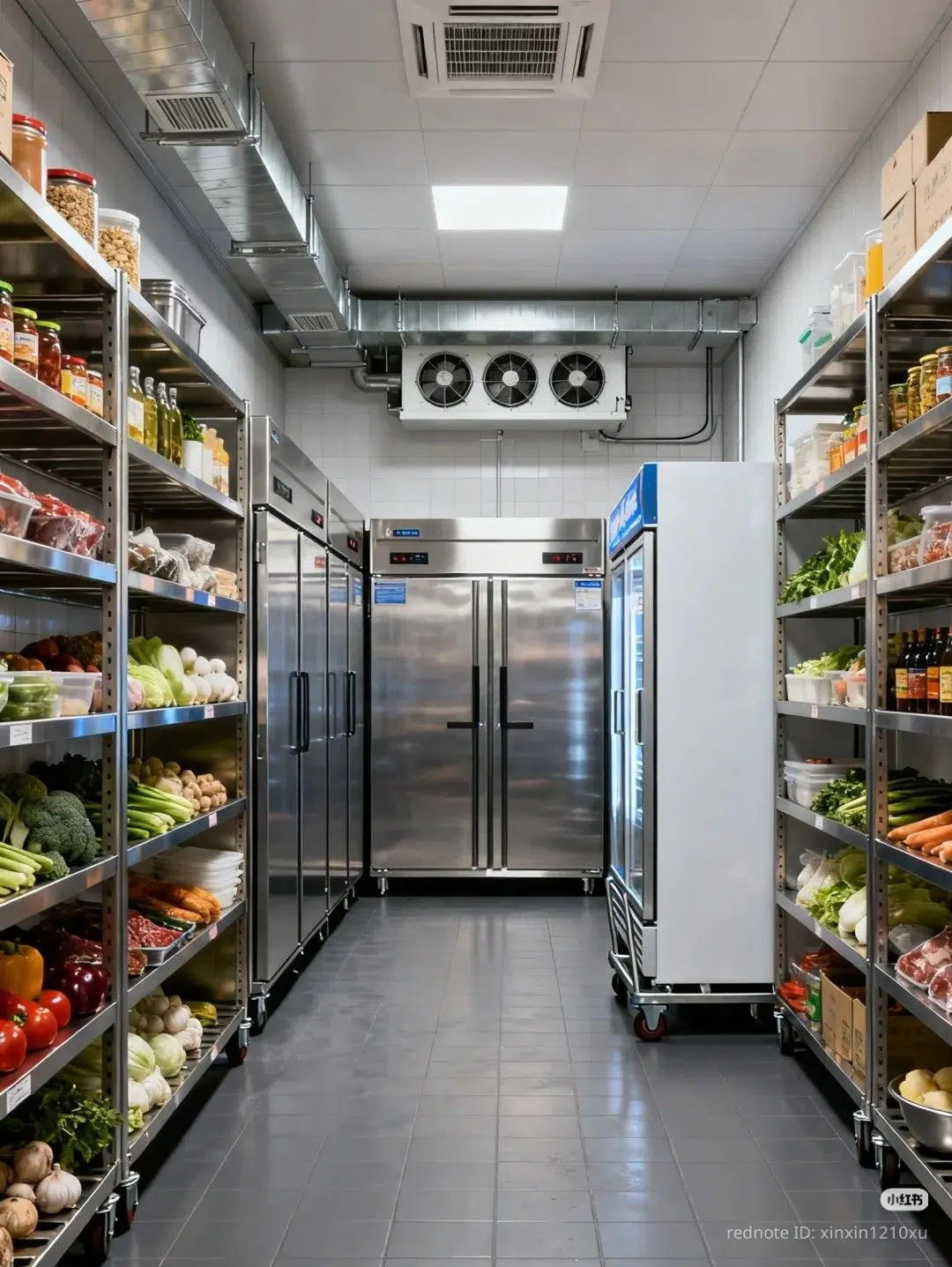
Why the Right Commercial Refrigeration Equipment Guide Matters for Your Business
The stakes in commercial refrigeration are extraordinarily high. According to the World Health Organization, unsafe food causes 600 million illnesses and 420,000 deaths worldwide every year. A significant portion of these incidents are linked to improper food storage and temperature control. For restaurant and café owners in the UAE, where food safety regulations are strictly enforced by authorities such as the Abu Dhabi Food Control Authority and Dubai Municipality, investing in proper kitchen refrigeration solutions is not optional — it is a legal and ethical obligation.
Beyond compliance, the right commercial refrigeration equipment guide helps you:
- Reduce food waste: Proper temperature management extends the shelf life of perishables, saving thousands of dirhams per month in spoilage costs.
- Improve kitchen efficiency: The right unit in the right location allows chefs to work faster, with ingredients closer at hand and better organized.
- Protect your reputation: A foodborne illness outbreak traced back to your establishment can be catastrophic. Reliable refrigeration is the first line of defense.
- Lower energy bills: Modern, energy-efficient commercial cooling equipment can dramatically reduce electricity costs — a major operating expense in the UAE.
- Extend equipment lifespan: Units designed for the Gulf climate will last significantly longer than standard models not rated for high ambient temperatures.
The Main Types of Commercial Refrigeration Equipment Explained
No single piece of equipment does everything. Understanding the different types of commercial refrigeration equipment is essential before making any purchasing decisions. Here is a detailed breakdown of each category, its purpose, and when it makes the most sense for your operation.
1. Walk-In Coolers and Walk-In Freezers
Walk-in coolers and freezers are the backbone of large-volume food storage. These are essentially refrigerated rooms that staff can physically enter to store and retrieve products. They range in size from small units that occupy just a few square meters to enormous installations that span entire warehouse sections.
In the context of restaurant refrigeration systems, walk-ins are typically used for storing bulk quantities of meat, dairy, produce, and beverages. They are particularly common in high-volume establishments such as hotel kitchens, central production kitchens, and busy restaurants that receive multiple deliveries per week.
- Ideal for: High-volume restaurants, hotels, central kitchens, supermarkets
- Temperature range: Coolers typically 0°C to 4°C; freezers -18°C to -25°C
- Key advantage: Maximum storage capacity with organized shelving systems
- Consideration: High upfront cost; requires significant floor space
2. Reach-In Refrigerators and Freezers
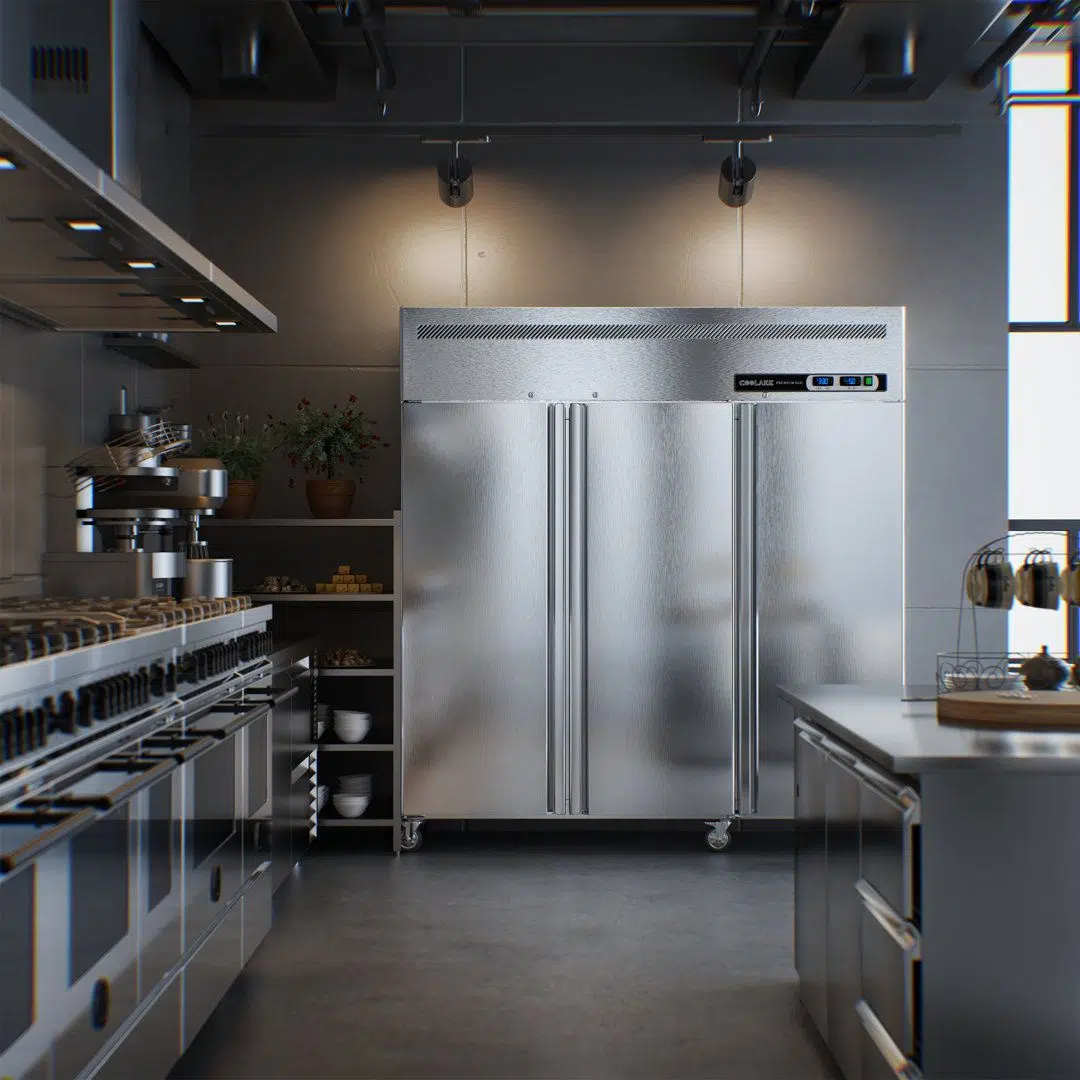
Reach-in units are the workhorses of the everyday commercial kitchen. These upright cabinets — typically one, two, or three doors wide — sit on the kitchen floor and provide easy, fast access to frequently used ingredients. They are found in virtually every professional kitchen worldwide, from small cafés to large hotel restaurants.
When following a commercial refrigeration equipment guide, reach-in units are often recommended as the starting point for new establishments. They offer an excellent balance between storage capacity, accessibility, and cost. In the UAE’s horeca refrigeration UAE market, you will find a wide range of reach-in models from global brands, all designed to perform reliably in high-ambient-temperature environments.
- Ideal for: All types of foodservice businesses as primary or secondary refrigeration
- Temperature range: Refrigerators 0°C to 4°C; freezers -18°C to -22°C
- Key advantage: Accessible, versatile, available in multiple sizes
- Consideration: Limited capacity compared to walk-ins
3. Undercounter Refrigerators and Freezers
Space is a premium in most commercial kitchens, especially in the UAE’s urban dining landscape where rental costs are high and kitchen footprints are compact. Undercounter refrigerators fit neatly beneath worktops, combining storage with valuable workspace. They are ideal for keeping ingredients within arm’s reach at prep stations and cooking lines.
These units play a critical role in kitchen refrigeration solutions for smaller operations and are also used as satellite refrigeration at busy stations in larger kitchens. Their lower profile makes them especially popular in open-kitchen restaurant designs where aesthetics matter.
4. Refrigerated Prep Tables (Sandwich and Pizza Prep Units)
A refrigerated prep table combines a refrigerated base with a chilled rail at the top, designed to hold ingredient inserts (known as hotel pans or GN containers) while maintaining safe temperatures during food assembly. These are essential in fast-paced operations like sandwich shops, pizza restaurants, burger bars, and salad bars.
In a busy kitchen environment, prep tables dramatically improve workflow efficiency. Chefs can assemble multiple dishes rapidly without repeatedly walking to a reach-in or walk-in unit. For any commercial refrigeration equipment guide, prep tables represent a blend of refrigeration and functionality that pays for itself in time savings alone.
🛒 Shop Kitchen Appliances in UAE — HorecaHut
5. Display Refrigerators and Merchandising Coolers
Not all refrigeration is purely functional — some of it is designed to sell. Display refrigerators, with their glass fronts and internal lighting, are essential in cafés, delis, bakeries, convenience stores, and hotel lobbies. They keep beverages, pastries, ready-to-eat meals, and desserts at safe temperatures while showcasing them attractively to customers.
In the UAE’s thriving café and grab-and-go culture, merchandising coolers have become a significant revenue-generating asset. A well-positioned, well-lit display fridge can increase impulse purchases substantially. When consulting a commercial refrigeration equipment guide, always consider the front-of-house as well as the back-of-house refrigeration needs.
6. Bar Refrigeration Units
Bar refrigeration includes a specialized range of commercial cooling equipment designed for beverage storage and service. This category includes back bar coolers (for chilling bottled and canned beverages), bottle coolers, ice cream freezer dipping cabinets, and keg coolers for draft beer systems.
In the UAE’s robust hospitality and hotel industry, bar refrigeration is a high-demand segment of horeca refrigeration UAE. The right bar refrigeration setup ensures quick service, consistent drink temperatures, and a professional customer experience.
7. Blast Chillers and Shock Freezers
Blast chillers and shock freezers are among the most specialized pieces of commercial refrigeration equipment in a professional kitchen. A blast chiller rapidly lowers the temperature of freshly cooked food from above 70°C to below 3°C in under 90 minutes, passing through the temperature danger zone (5°C to 60°C) as quickly as possible to inhibit bacterial growth.
Shock freezers take this a step further, bringing food down to -18°C rapidly. Both units are particularly important in cook-chill operations, catering companies, and high-volume institutional kitchens where large batches of food are prepared in advance and stored for later service. They are also increasingly required by health authorities in the UAE as food safety standards tighten.
How to Choose the Right Commercial Refrigeration Equipment: A Step-by-Step Guide
Choosing the right commercial refrigeration equipment for your restaurant or café is a structured process that should never be rushed. Following this step-by-step framework will help you make the best decision for your specific operation.
Step 1: Assess Your Volume and Menu Requirements
Start by analyzing how much product you store and turn over daily and weekly. A 20-cover café has very different refrigeration needs from a 200-seat restaurant. Review your menu to understand what types of products require refrigeration — proteins, dairy, produce, beverages, desserts — and how quickly they are consumed. This assessment forms the foundation of your kitchen refrigeration solutions strategy.
Step 2: Evaluate Your Available Kitchen Space
Measure your kitchen footprint carefully. Consider not just the floor space available, but also ceiling height (critical for tall units), door swing clearance, ventilation requirements (top-mounted vs. rear-mounted condensers need different clearances), and workflow patterns. In many UAE kitchen setups, space efficiency is a primary driver of equipment decisions, making undercounter and compact commercial refrigeration equipment particularly popular.
Step 3: Consider the UAE’s Ambient Temperature Conditions
This is a critical factor often overlooked by buyers who rely on equipment specifications designed for European or North American climates. The UAE experiences ambient temperatures that can exceed 45°C outdoors and remain above 35°C in poorly ventilated kitchen areas. Standard commercial refrigeration units are typically rated for ambient temperatures up to 32°C (Class SN-T) or sometimes 43°C (Class T). Always verify the climate class rating of any unit you purchase for horeca refrigeration UAE applications.
Step 4: Check Energy Efficiency Ratings
Electricity costs in commercial kitchens can be staggering. Refrigeration equipment runs 24 hours a day, 7 days a week, and represents one of the largest energy expenses in any foodservice operation. Look for units with high energy efficiency ratings, inverter-driven compressors, and LED interior lighting. Over a 5-year equipment lifecycle, energy savings from an efficient commercial refrigeration equipment unit can easily offset a higher upfront purchase price.
Step 5: Verify Food Safety Compliance
UAE food safety regulations require that certain categories of food be stored within specific temperature ranges. Your commercial refrigeration equipment must be capable of maintaining these temperatures consistently, even during peak usage. Look for units with digital temperature displays, alarms for temperature excursions, and HACCP-friendly features such as data logging.
🛒 Explore Kitchen Accessories & More — HorecaHut UAE
Step 6: Choose the Right Brand and After-Sales Support
In the UAE market, after-sales service and spare parts availability are critical considerations. A commercial refrigerator from a brand with strong local support will be repaired faster and more cost-effectively than one from a brand with limited UAE presence. When using a commercial refrigeration equipment guide, always verify warranty terms, local service center availability, and spare parts supply chains before making a final decision.
Commercial Refrigeration Equipment Comparison Table
Use this quick-reference comparison table to identify which type of commercial refrigeration equipment best suits your specific operational needs:
| Equipment Type | Best For | Temperature Range | Capacity | Space Required | Cost Range (AED) |
| Walk-In Cooler | High-volume storage | 0°C to 4°C | Very High | Large | 15,000–80,000+ |
| Walk-In Freezer | Bulk frozen storage | -18°C to -25°C | Very High | Large | 20,000–100,000+ |
| Reach-In Fridge | Daily kitchen use | 0°C to 4°C | Medium | Moderate | 3,000–15,000 |
| Undercounter Fridge | Prep stations | 0°C to 4°C | Low–Medium | Minimal | 2,000–8,000 |
| Prep Table | Assembly stations | 0°C to 4°C | Medium | Moderate | 4,000–18,000 |
| Display Cooler | Front-of-house sales | 2°C to 8°C | Medium | Moderate | 3,000–20,000 |
| Blast Chiller | Cook-chill operations | -20°C to +70°C | Variable | Moderate | 10,000–50,000+ |
Restaurant Refrigeration Systems: Designing Your Kitchen’s Cold Chain
A truly effective kitchen refrigeration strategy goes beyond buying individual units. It involves designing a complete cold chain — a system of interconnected refrigeration points that ensures food remains at safe temperatures from the moment it arrives at your loading dock to the moment it reaches the customer’s plate.
Leading restaurant refrigeration systems designers typically structure the cold chain in three zones:
Zone 1: Bulk Storage (Receiving and Long-Term Storage)
This zone typically uses walk-in coolers and freezers located near the receiving dock. Products arrive, are inspected, labeled with receive dates, and stored at appropriate temperatures. This zone forms the foundation of the commercial refrigeration equipment system and must have the highest capacity and most robust temperature stability.
Zone 2: Working Refrigeration (Daily Prep and Line Use)
Reach-in units, undercounter fridges, and prep tables populate this zone — located on the kitchen line and in prep areas. Products are pulled from Zone 1 daily and kept here for immediate use. Proper organization in this zone prevents cross-contamination and keeps the kitchen team working efficiently.
Zone 3: Service Refrigeration (Front-of-House and Service Areas)
Display coolers, bar refrigeration, and service fridges complete the cold chain, ensuring that products ready for sale or immediate service are maintained at safe temperatures right up until delivery to the customer. In a well-designed commercial refrigeration equipment guide, this zone is often underinvested — but it is where food safety incidents most frequently occur.
🛒 Shop GN Containers & Food Storage — HorecaHut UAE
Horeca Refrigeration UAE: What Makes the Gulf Market Different
The horeca refrigeration UAE market has unique characteristics that make it different from refrigeration markets in Europe, Asia, or the Americas. Understanding these differences is essential for any operator or buyer working in the Gulf region.
High Ambient Temperature Requirements
As mentioned, the UAE’s extreme heat places enormous demands on refrigeration equipment. Units must be rated for ambient temperatures of at least 43°C and ideally higher. Tropicalized compressors, larger condenser coils, and enhanced fan systems are features to look for specifically in commercial cooling equipment destined for the Gulf market.
Dust and Sandstorm Conditions
In the UAE, particularly in areas near the desert, dust and fine sand can penetrate poorly sealed equipment and clog condenser coils rapidly. Regular maintenance and cleaning schedules are even more critical here than elsewhere. Choose commercial refrigeration equipment with easily cleanable condenser coils and consider units with dust filters where applicable.
Energy Costs and Sustainability Goals
The UAE government has set ambitious sustainability targets, and energy-efficient kitchen refrigeration solutions align with these national goals. Many commercial kitchen operators in the UAE are now prioritizing R290 (propane) refrigerant units — a natural refrigerant with near-zero global warming potential — as part of their sustainability commitments.
Local Food Safety Regulations
The UAE has comprehensive food safety regulations enforced by emirate-level authorities. Dubai’s Food Safety Department, Abu Dhabi’s ADAFSA, and Sharjah’s relevant authorities all require that food businesses maintain documented temperature records. Modern commercial refrigeration equipment guide recommendations increasingly include units with built-in HACCP data logging and remote temperature monitoring capabilities.
Maintenance Tips for Commercial Refrigeration Equipment
Even the best commercial refrigeration equipment will underperform or fail prematurely without proper maintenance. Here is a maintenance schedule that every foodservice operator should implement:
Daily Maintenance Tasks
- Check and record temperature readings for all refrigeration units
- Inspect door seals (gaskets) for any signs of wear or damage
- Ensure condenser vents and air intakes are not blocked
- Clean interior shelves and surfaces with approved food-safe sanitizers
- Verify that all products are properly covered and labeled
Weekly Maintenance Tasks
- Clean condenser coils (more frequently in dusty environments)
- Check drain pans and drain lines for blockages
- Inspect fan blades for dust buildup
- Test door alarms and temperature alarms for functionality
Quarterly and Annual Maintenance Tasks
- Professional servicing by a qualified refrigeration engineer
- Check refrigerant levels and inspect for leaks
- Clean evaporator coils thoroughly
- Replace door gaskets if signs of wear are detected
- Review energy consumption data and compare against benchmarks
Following a rigorous maintenance schedule extends the life of your commercial refrigeration equipment, reduces breakdown risk, and keeps energy consumption at optimal levels. In the UAE climate, quarterly professional servicing is strongly recommended rather than the annual schedule that might suffice in cooler climates.
🛒 Browse Professional Food Containers — HorecaHut UAE
Top Brands in Commercial Refrigeration Equipment for the UAE Market
The UAE horeca refrigeration UAE market features products from many globally recognized brands. Each has strengths and considerations that make them suitable for different types of operations:
Hoshizaki
The Japanese brand Hoshizaki is widely regarded as one of the gold standards in commercial refrigeration equipment. Known for their exceptional build quality, energy efficiency, and performance in high-ambient-temperature environments, Hoshizaki units are popular across the UAE’s luxury hotel and fine dining sectors.
True Refrigeration
American brand True is renowned for its long-lasting, robust reach-in refrigerators and freezers. True units are built to exacting standards and are popular in the UAE’s mid-to-upper-tier restaurant segment as a reliable kitchen refrigeration solutions provider.
Electrolux Professional / Zanussi Professional
These European brands from the same parent company offer a comprehensive range of commercial cooling equipment, from prep tables and reach-ins to blast chillers and walk-in refrigeration solutions. Widely available in the UAE with strong after-sales support.
Williams Refrigeration
UK-based Williams is particularly popular in the UAE’s hotel and catering segment. Their Jade and Diamond series are engineered specifically for tropical climates, making them an excellent choice for horeca refrigeration UAE applications.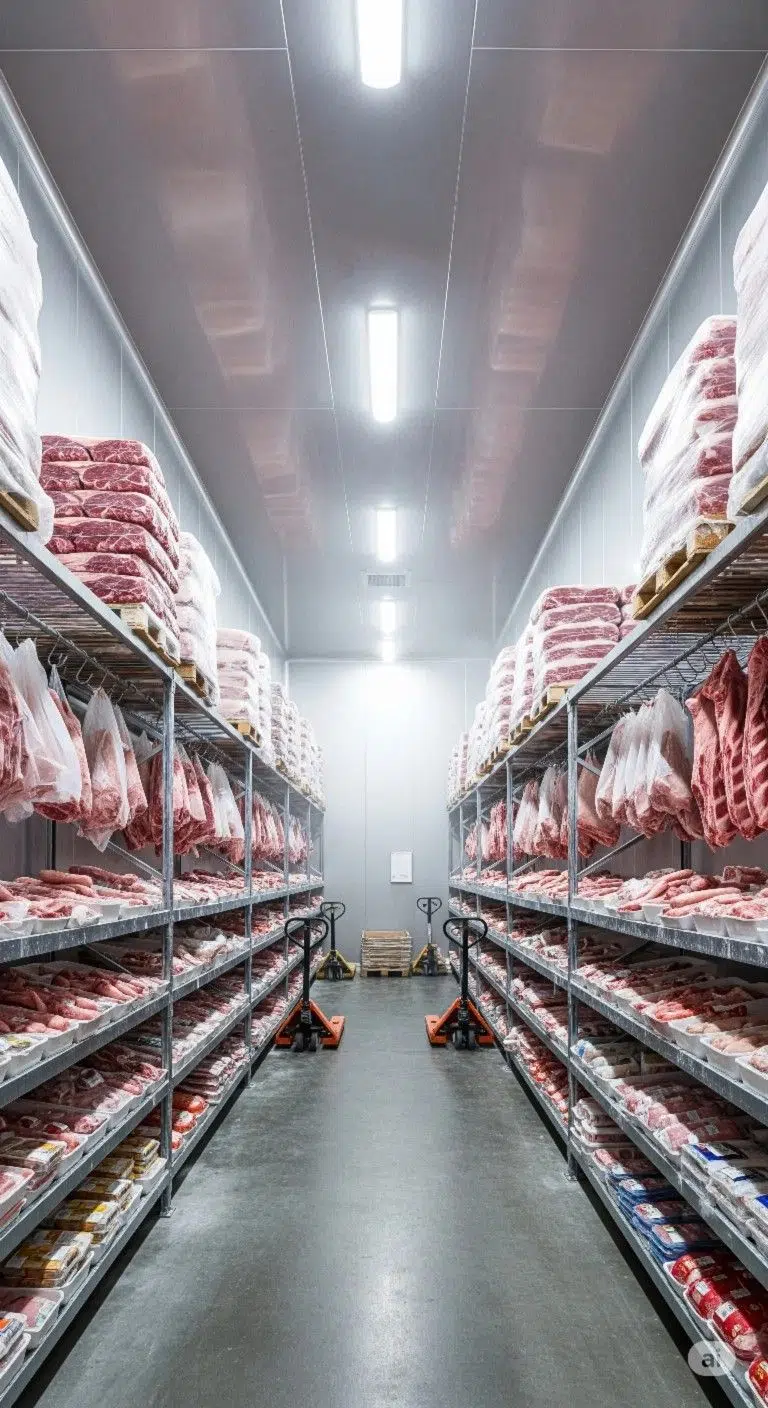
Energy Efficiency and Sustainability in Commercial Refrigeration Equipment
Energy efficiency is no longer a nice-to-have feature in commercial refrigeration equipment — it is a business imperative. Refrigeration accounts for up to 40% of a restaurant’s total electricity consumption. With electricity prices in the UAE, even modest efficiency improvements translate to significant cost savings.
Key energy-saving features to look for when consulting a commercial refrigeration equipment guide:
- Inverter compressor technology: Adjusts motor speed based on demand rather than running at constant full speed
- LED interior lighting: Uses up to 60% less energy than traditional fluorescent tubes
- Auto door closers and door alarms: Prevent energy waste from accidentally open doors
- Night blinds on display cases: Reduce energy loss during closed hours
- Natural refrigerants (R290/R600a): Lower Global Warming Potential and often higher efficiency than older refrigerants
- Adaptive defrost systems: Defrost based on actual need rather than fixed time intervals
🛒 Explore Professional Barware & Equipment — HorecaHut UAE
Common Mistakes to Avoid When Buying Commercial Refrigeration Equipment
Even experienced operators make costly mistakes when purchasing commercial refrigeration equipment. Here are the most common pitfalls and how to avoid them:
Mistake 1: Buying Based on Price Alone
The cheapest commercial cooling equipment almost always has the highest total cost of ownership. Cheap units break down more frequently, consume more energy, and often cannot cope with the UAE’s extreme ambient temperatures. Always factor in the 5-year total cost of ownership rather than just the purchase price.
Mistake 2: Ignoring Climate Class Ratings
As emphasized throughout this commercial refrigeration equipment guide, climate class is critical in the UAE. A unit rated only for Class SN (up to 32°C ambient) will struggle and eventually fail in UAE kitchen conditions. Always verify that your chosen unit carries at least a Class T rating (up to 43°C).
Mistake 3: Underestimating Capacity Needs
Many operators buy restaurant refrigeration systems based on their current needs without planning for growth. A unit that is running at 90% capacity from day one will struggle with business growth, seasonal peaks, and added menu items. Purchase with at least 20–30% additional capacity as a buffer.
Mistake 4: Neglecting Ventilation Planning
Refrigeration units generate significant heat from their condensers. If this heat cannot escape effectively, the unit must work harder, consumes more energy, and breaks down sooner. Proper kitchen ventilation planning is an essential part of any commercial refrigeration equipment installation.
Mistake 5: Skipping Professional Installation
Walk-in coolers, blast chillers, and large reach-in units require professional installation to perform correctly and safely. Improper installation can void warranties, cause refrigerant leaks, create food safety hazards, and result in units that never achieve their rated performance levels.
Frequently Asked Questions About Commercial Refrigeration Equipment
Q1: What is the most important commercial refrigeration equipment for a new restaurant?
For most new restaurants, a two or three-door reach-in refrigerator and a one or two-door reach-in freezer are the essential starting points. As volume grows, adding an undercounter unit at the prep or cooking line improves efficiency. This commercial refrigeration equipment guide recommends starting with quality reach-ins from tropicalized brands and expanding as your business scales.
Q2: What temperature should commercial refrigerators operate at in the UAE?
UAE food safety regulations require that perishable food be stored at or below 5°C (refrigeration) and at or below -18°C (freezing). Most commercial refrigeration equipment is set to maintain between 1°C and 4°C for refrigerators and -18°C to -22°C for freezers, providing a safety margin above the regulatory minimum.
Q3: How long does commercial refrigeration equipment last?
With proper maintenance, quality commercial refrigeration equipment typically lasts 10–15 years. In the UAE’s harsh climate, units that are not tropicalized may fail significantly sooner. Regular professional servicing, clean condenser coils, and prompt door gasket replacement are the most effective ways to maximize equipment lifespan.
Q4: Do I need a walk-in cooler or will reach-in units be sufficient?
This depends entirely on your volume. For restaurants serving fewer than 100 covers per service, well-configured reach-in restaurant refrigeration systems are usually sufficient. High-volume operations, hotels, and central production kitchens almost always require walk-in storage. Consider a walk-in if you receive large bulk deliveries, have limited delivery frequency, or need to store large-format items like whole carcasses or full-sheet trays.
Q5: What does ‘tropicalized’ mean for commercial refrigeration in the UAE?
A ‘tropicalized’ commercial refrigeration equipment unit is one specifically engineered to operate reliably in high ambient temperature environments — typically classified as Climate Class T, rated for ambient temperatures up to 43°C. Features include oversized compressors, enhanced condenser coils, higher-capacity fans, and sealed electrical components resistant to heat and humidity.
Q6: How much does commercial refrigeration equipment cost in the UAE?
Costs vary widely. Undercounter units start from approximately AED 2,000, quality reach-in refrigerators from AED 3,000–15,000, and walk-in systems from AED 15,000 to AED 100,000+. Blast chillers range from AED 10,000 to over AED 50,000 depending on capacity. Always factor installation, delivery, and ongoing maintenance costs into your commercial refrigeration equipment budget.
Q7: What is the best refrigerant to use in the UAE climate?
R290 (propane) and R448A/R449A are increasingly popular in the UAE’s horeca refrigeration UAE market for their combination of high efficiency and low environmental impact. R290 units offer excellent performance in tropical climates and have near-zero Global Warming Potential. Avoid older R22 units, which are being phased out globally due to their ozone-depleting properties.
Q8: How often should commercial refrigeration equipment be serviced in the UAE?
Due to the UAE’s high ambient temperatures and dusty environment, quarterly professional servicing is strongly recommended for all commercial refrigeration equipment. Condenser coils should be cleaned at least monthly in dusty locations. Daily temperature checks and weekly door gasket inspections by kitchen staff are also essential.
Q9: Can I use domestic refrigerators in a commercial kitchen?
No. Domestic refrigerators are not designed for the continuous opening and closing cycles, high ambient temperatures, or food safety standards required in commercial environments. UAE food safety authorities prohibit the use of domestic refrigerators in licensed food businesses. Always invest in purpose-built commercial refrigeration equipment for any professional kitchen.
Q10: What certifications should I look for when buying commercial refrigeration?
Look for units certified to international standards including NSF (National Sanitation Foundation), CE marking, ISO certifications, and relevant Gulf Standards Organization (GSO) approvals. For horeca refrigeration UAE applications, ensure the supplier can provide documentation of local regulatory compliance upon request from food safety inspection authorities.
Q11: What is a blast chiller and do I need one?
A blast chiller rapidly cools cooked food from serving temperature to safe storage temperature within 90 minutes, dramatically reducing bacterial growth risk. You need one if you operate a cook-chill production system, a catering operation, or a restaurant that prepares large batches of food in advance. Increasingly, UAE food safety authorities are recommending or requiring blast chillers for specific categories of commercial refrigeration equipment in licensed kitchens.
Q12: Where can I buy commercial refrigeration equipment in the UAE?
Commercial refrigeration equipment is available through specialist horeca equipment suppliers across the UAE. Look for suppliers who offer product demonstrations, post-purchase installation support, and responsive after-sales service. HorecaHut provides a comprehensive range of kitchen refrigeration solutions and kitchen appliances specifically selected for the UAE market.
🛒 Shop Best Kitchen Appliances in UAE — HorecaHut
Conclusion: Your Commercial Refrigeration Equipment Guide to Success
Running a successful restaurant or café in the UAE demands excellence at every level — and your cold chain is one of the most critical systems in your entire operation. From walk-in coolers that protect your bulk inventory to undercounter units that keep your chefs working efficiently, every piece of commercial refrigeration equipment you choose plays a direct role in your food safety compliance, your operational efficiency, and ultimately, your profitability.
This commercial refrigeration equipment guide has walked you through the complete landscape of restaurant refrigeration systems, from basic definitions to detailed comparisons, step-by-step purchasing frameworks, maintenance schedules, and the unique considerations of the horeca refrigeration UAE market. Armed with this knowledge, you are now equipped to make smart, informed decisions that will serve your business well for years to come.
The right commercial refrigeration equipment is not an expense — it is an investment in food safety, efficiency, and the long-term reputation of your establishment. Take your time, ask the right questions, and choose units that are built for the demands of the UAE’s unique environment.
If you found this guide valuable, share it with other hospitality professionals, leave your questions in the comments below, and explore our full range of kitchen refrigeration solutions and professional kitchen equipment at HorecaHut.ae — your trusted partner for all things horeca in the UAE.
🛒 Explore All Kitchen Appliances & Equipment — HorecaHut UAE


