











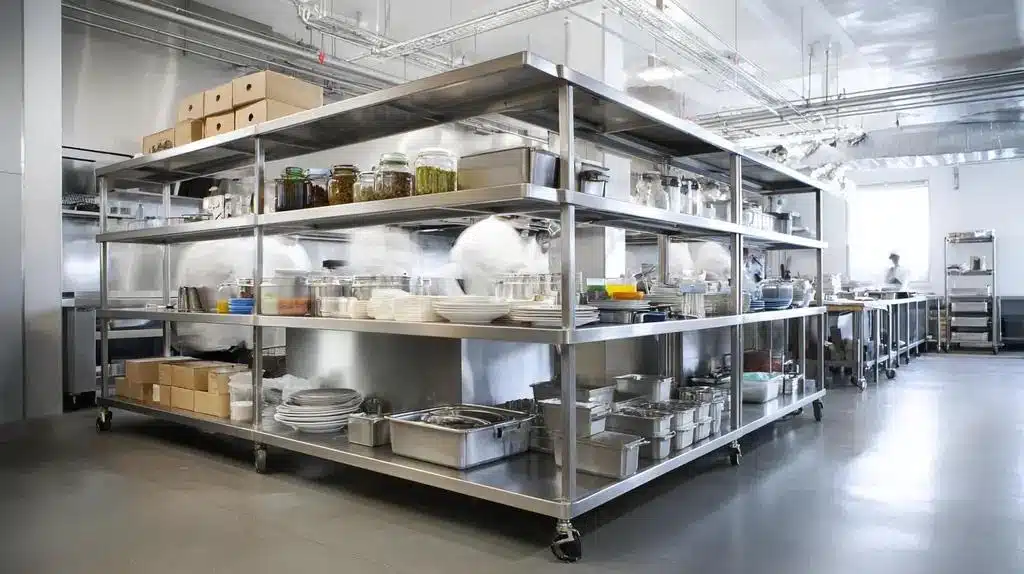

Efficient storage is one of the most overlooked yet essential components of a successful professional kitchen. While chefs, operators, and business owners often focus heavily on cooking equipment, refrigeration, and food preparation systems, poor storage planning can silently reduce productivity, increase waste, create safety risks, and slow down operations.
In catering environments, storage becomes even more critical.
Unlike traditional restaurants, catering businesses must manage large volumes of equipment, ingredients, serving tools, transport containers, buffet accessories, and mobile service units—often under tight timelines and changing operational requirements.
This makes catering equipment storage solutions a strategic operational necessity rather than a simple organizational choice.
For catering companies, hotels, banquet venues, central kitchens, event operators, and hospitality businesses across Dubai, Abu Dhabi, Sharjah, Ajman, Ras Al Khaimah, Fujairah, Al Ain, and Umm Al Quwain, investing in professional storage systems directly improves efficiency, hygiene, workflow, and profitability.
As a trusted horeca solutions provider in the UAE, Horeca Hut supports hospitality businesses with storage systems designed to optimize professional kitchen performance and long-term operational scalability.
Why Storage Matters in Professional Catering Kitchens
In large-scale catering operations, storage affects nearly every part of the workflow.
Poorly designed storage systems often cause:
- Delayed preparation
- Increased staff movement
- Product damage
- Food spoilage
- Inventory mismanagement
- Slower event setup
- Higher operational stress
When ingredients, tools, and equipment are not properly stored, even high-performing kitchens experience inefficiencies.
Benefits of Professional Storage Solutions
Well-designed commercial kitchen storage helps businesses:
- Improve workflow
- Maximize space usage
- Reduce clutter
- Improve inventory visibility
- Reduce food waste
- Improve hygiene standards
- Increase operational efficiency
This is why professional storage planning is a major priority in modern horeca kitchen design.
Understanding Storage Requirements in Catering Operations
Catering kitchens manage a wider variety of assets than most foodservice businesses.
Storage needs typically include:
- Dry ingredients
- Refrigerated ingredients
- Frozen inventory
- Serving equipment
- Buffet accessories
- Cleaning supplies
- Mobile catering tools
- Packaging materials
Each category requires specific storage solutions.
Why Catering Businesses Need Specialized Storage
Catering operations frequently deal with:
- Bulk inventory
- Seasonal demand spikes
- Event-specific equipment
- Frequent transportation
- Temporary service setups
As a result, storage systems must balance organization, accessibility, durability, and flexibility.
Core Categories of Catering Storage Solutions
Professional kitchens typically use multiple storage systems.
The most common categories include:
- Shelving systems
- Dry storage systems
- Cold storage solutions
- Mobile storage units
- Racking systems
- Ingredient bins
- Equipment storage stations
Each system serves a specific purpose within kitchen operations.
Commercial Kitchen Shelving Systems

Shelving systems form the foundation of most storage environments.
Professional catering shelving systems help organize ingredients, cookware, and operational tools efficiently.
Benefits of Shelving Systems
Quality shelving helps:
- Maximize vertical space
- Improve organization
- Increase accessibility
- Reduce clutter
Common Shelving Types
Popular options include:
- Stainless steel shelving
- Wire shelving
- Heavy-duty storage racks
- Wall-mounted shelves
Hotels and catering kitchens across Dubai and Abu Dhabi often rely on stainless-steel shelving due to durability and hygiene advantages.
Dry Storage Solutions
Dry storage areas are essential for non-perishable inventory.
Typical stored items include:
- Flour
- Rice
- Sugar
- Oils
- Spices
- Packaging materials
Why Dry Storage Organization Matters
Efficient dry storage helps businesses:
- Improve stock control
- Prevent contamination
- Reduce spoilage
- Improve workflow
Professional storage planning improves both accessibility and inventory accuracy.
Food Storage Equipment for Temperature-Sensitive Products
![[식품위생점검 가이드] 영업정지 부르는 냉장고 관리, 3가지 - 대한민국 냉장쇼케이스 점유율 1위 브랜드 한성쇼케이스 블로그](https://images.openai.com/static-rsc-4/Bqyd9bDhkRNCFOKM3w6gFov2jC-z6SOA6RPnwKINsa4V_E08B4LEarMENJ_9BreiiQ5D4wDul62SuvsSHEo8zeDhhIyetiIOuhiULks_yKyILVG0jLN6KxStVpFgrIxNU81jDS5sPshiV7L4yi8RX2eVkBCFFN7t4gVgxqL915BViyCzZ8PvgdmGZ__tO_Or?purpose=fullsize "Horeca Hut | Catering Equipment Storage Solutions for Professional Kitchens")
Not all food can be stored in ambient environments.
Temperature-sensitive ingredients require dedicated food storage equipment.
Refrigerated Storage
Used for:
- Dairy
- Fresh vegetables
- Meat
- Seafood
- Prepared ingredients
Frozen Storage
Required for:
- Frozen inventory
- Long-term storage
- Batch production planning
Proper cold storage protects food quality and regulatory compliance.
Mobile Storage Solutions

Mobility is especially important in catering operations.
Equipment often needs to move between:
- Production kitchens
- Storage areas
- Event venues
- Service stations
Common Mobile Storage Equipment
Examples include:
- Rolling racks
- Mobile shelving
- Transport carts
- Utility trolleys
These systems improve operational flexibility while reducing manual handling.
Ingredient Storage Bins

Bulk ingredient storage is common in professional kitchens.
Dedicated bins improve organization and protect ingredient quality.
Common Uses
Storage bins are often used for:
- Flour
- Sugar
- Rice
- Dry mixes
- Baking ingredients
Benefits
Ingredient bins help:
- Reduce contamination risk
- Improve inventory visibility
- Simplify stock rotation
Proper labeling further improves efficiency.
Equipment Storage for Catering Operations
Catering businesses manage significant amounts of service equipment.
This often includes:
- Chafing dishes
- Serving trays
- Buffet stands
- Beverage dispensers
- Food warmers
- Display equipment
Without organized storage, event preparation becomes inefficient.
Best Practices
Professional equipment storage should prioritize:
- Accessibility
- Protection
- Safe stacking
- Transport readiness
Racking Systems for Bulk Storage

Large-scale operations often require heavy-duty racking.
Racking systems support:
- High-capacity storage
- Bulk inventory management
- Space optimization
These systems are particularly useful in central kitchens, hotel warehouses, and large catering facilities.
Storage Planning and Space Optimization
Storage is not only about shelves or bins.
It is also about layout design.
Poor storage layouts create unnecessary staff movement and workflow disruption.
Key Planning Factors
Before selecting storage systems, operators should evaluate:
- Available floor space
- Ceiling height
- Inventory volume
- Workflow paths
- Accessibility needs
Proper planning maximizes usable space while improving kitchen efficiency.
Catering Equipment Storage Solutions for Professional Kitchens
Storage Workflow Optimization
Even the best storage equipment cannot deliver maximum efficiency without proper workflow planning.
In professional catering kitchens, storage systems should support operational flow rather than create obstacles.
Poor storage workflow often results in:
- Excess staff movement
- Delayed preparation
- Slower dispatch times
- Congested work zones
- Increased labor waste
Optimized storage layouts improve speed and reduce operational friction.
Recommended Storage Workflow
A professional catering kitchen typically follows this storage workflow:
- Receiving & Inspection
- Dry / Cold Storage Allocation
- Ingredient Preparation Access
- Production Usage
- Temporary Holding
- Dispatch / Event Preparation
This structured flow minimizes unnecessary movement while improving operational coordination.
Benefits of Storage Workflow Planning
Efficient storage workflow helps businesses:
- Improve preparation speed
- Reduce bottlenecks
- Improve inventory control
- Support faster service execution
Large catering kitchens in Dubai Marina, Downtown Dubai, Business Bay, and Dubai Investment Park frequently prioritize workflow-driven storage design.
Food Safety and Hygiene in Storage Systems
Storage directly affects food safety.
Improper storage practices can lead to contamination, spoilage, and compliance issues.
Professional food storage equipment helps businesses maintain hygiene standards throughout operations.
Common Food Safety Risks
Poor storage systems may lead to:
- Cross-contamination
- Expired inventory usage
- Temperature instability
- Pest exposure
- Product damage
Storage Hygiene Best Practices
Professional kitchens should prioritize:
- Clear product labeling
- FIFO stock rotation
- Separate raw and cooked storage
- Regular cleaning schedules
- Temperature monitoring
These practices help protect food quality while improving compliance.
Inventory Management and Storage Efficiency
Efficient storage is closely tied to inventory management.
Without visibility into stock levels, kitchens often experience:
- Overstocking
- Ingredient shortages
- Product waste
- Expired inventory
Why Inventory Visibility Matters
Proper storage systems help operators:
- Track stock faster
- Improve purchasing decisions
- Reduce spoilage
- Optimize ordering cycles
Hotels and catering businesses across Abu Dhabi and Sharjah increasingly integrate storage planning with inventory optimization strategies.
Energy Efficiency in Storage Systems
Storage systems can also affect energy usage.
This is especially true for refrigerated storage environments.
Energy-efficient storage solutions help reduce operating costs while supporting sustainability.
Benefits of Energy-Efficient Storage Systems
Advantages include:
- Lower electricity consumption
- Reduced cooling loss
- Improved sustainability
- Better operating efficiency
Features That Improve Efficiency
Examples include:
- Insulated storage environments
- Efficient refrigeration systems
- Proper airflow design
- Smart temperature monitoring
These improvements help professional kitchens reduce long-term costs.
Common Catering Storage Mistakes
Many catering businesses invest heavily in equipment but overlook storage planning.
This often creates long-term inefficiencies.
Underestimating Storage Requirements
One of the most common mistakes is planning storage based only on current operations.
Growing businesses should always account for future expansion.
Poor Vertical Space Utilization
Many kitchens waste valuable storage capacity by ignoring vertical space.
Shelving and racking systems can dramatically improve usable storage volume.
Mixing Equipment and Ingredient Storage
Combining unrelated storage categories often creates confusion and workflow inefficiencies.
Poor Accessibility
Storage systems should prioritize quick access to frequently used items.
Poor accessibility slows operations and increases labor waste.
Lack of Mobile Storage
Catering operations frequently require equipment movement between kitchens and venues.
Static storage alone may limit flexibility.
Why Storage Solutions Matter in Dubai’s Catering Industry
Dubai’s hospitality and events industry continues to grow rapidly.
Catering companies, hotels, event organizers, and banquet operators must deliver fast, high-quality service under increasingly competitive conditions.
Businesses operating in:
- Dubai Marina
- Downtown Dubai
- Palm Jumeirah
- Business Bay
- Jumeirah
- Dubai Creek
- Expo City Dubai
- Dubai Investment Park
often manage large event volumes and complex catering logistics.
This makes efficient storage systems a major competitive advantage.
Growing Demand Across the UAE
Demand for professional horeca storage organization continues to expand across:
- Abu Dhabi
- Sharjah
- Ajman
- Ras Al Khaimah
- Fujairah
- Al Ain
- Umm Al Quwain
Key growth drivers include:
- Hotel expansion
- Catering industry growth
- Event sector development
- Tourism growth
- Hospitality investments
As operations scale, professional storage systems become increasingly essential.
Why Horeca Hut Is a Trusted Partner for Storage Solutions
Storage planning is not simply about buying shelves.
Professional hospitality businesses need integrated storage solutions that improve workflow, organization, hygiene, and scalability.
This is where Horeca Hut provides exceptional value.
Horeca Hut supports hotels, caterers, restaurants, banquet venues, and hospitality businesses across the UAE with:
- Catering equipment storage solutions
- Commercial kitchen storage systems
- Catering shelving systems
- Food storage equipment
- Horeca storage organization
- Heavy-duty racking systems
- Ingredient storage solutions
- Mobile storage equipment
- Complete professional kitchen solutions
Whether building a catering production kitchen in Dubai, expanding banquet operations in Abu Dhabi, upgrading hospitality storage in Sharjah, or launching a central kitchen anywhere in the UAE, Horeca Hut delivers storage solutions designed for operational excellence.
Unlike ordinary equipment suppliers, Horeca Hut acts as a long-term operational partner—helping businesses optimize kitchen layouts, improve workflow efficiency, and maximize usable space.
Conclusion
A professional catering equipment storage strategy goes far beyond simple shelving.
Successful catering operations require storage systems that support:
- Inventory organization
- Food safety
- Workflow efficiency
- Space optimization
- Operational scalability
A complete storage setup may include:
- Shelving systems
- Dry storage solutions
- Refrigerated storage
- Ingredient bins
- Mobile storage units
- Heavy-duty racking systems
The right storage infrastructure improves productivity, reduces waste, enhances hygiene, and strengthens long-term operational performance.
For catering companies, hotels, central kitchens, and hospitality businesses operating across Dubai, Abu Dhabi, Sharjah, Ajman, Ras Al Khaimah, Fujairah, Al Ain, and Umm Al Quwain, investing in professional storage systems remains a critical component of sustainable growth.
Frequently Asked Questions
What are catering equipment storage solutions?
Catering equipment storage solutions include shelving, racking, mobile storage, ingredient bins, and food storage systems designed to organize professional kitchen operations.
Why is storage important in professional kitchens?
Proper storage improves workflow, reduces waste, enhances hygiene, and increases operational efficiency.
What is commercial kitchen storage?
Commercial kitchen storage refers to specialized storage systems designed for professional foodservice environments.
What are catering shelving systems?
Catering shelving systems are heavy-duty storage shelves used to organize ingredients, tools, equipment, and supplies.
How can kitchens optimize storage space?
Kitchens improve storage through vertical shelving, workflow planning, mobile systems, and organized zoning.
Why is mobile storage important in catering?
Mobile storage improves flexibility, reduces transport effort, and supports off-site event operations.
How does storage affect food safety?
Proper storage reduces contamination risk, supports temperature control, and improves inventory rotation.
What are common storage mistakes?
Common mistakes include poor space planning, lack of organization, inadequate capacity, and ignoring workflow needs.
Are storage systems important for catering growth?
Yes. Scalable storage systems support operational growth, better inventory management, and improved efficiency.
Where can catering businesses find storage solutions in the UAE?
Catering businesses, hotels, and professional kitchens across Dubai, Abu Dhabi, Sharjah, Ajman, Ras Al Khaimah, Fujairah, Al Ain, and Umm Al Quwain often choose Horeca Hut for storage systems, shelving solutions, and complete horeca equipment.


