















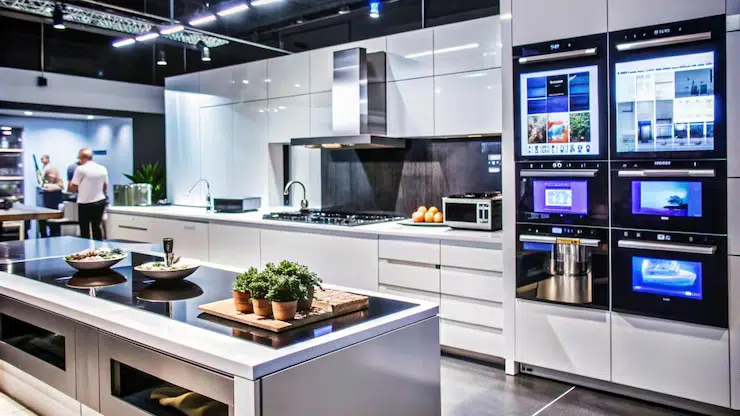
Imagine walking into your restaurant kitchen at 6 AM and discovering that — before you even switched on the lights — your smart kitchen technology for restaurants had already adjusted refrigeration temperatures, flagged a low-stock alert for your morning prep, and sent a maintenance report about the oven running 5% below optimal efficiency. No chaos, no guesswork. Just seamless, data-driven precision.
This isn’t a distant vision of the future. It’s happening right now in commercial kitchens across the UAE and around the world. Operators embracing smart kitchen technology for restaurants are pulling dramatically ahead of their competition. In an industry where margins are razor-thin and guest expectations are sky-high, the difference between thriving and merely surviving often comes down to how intelligently your kitchen operates.
In this comprehensive guide, we explore every dimension of smart kitchen technology for restaurants — from connected kitchen systems and restaurant automation technology to IoT kitchen equipment and smart restaurant equipment — giving you the knowledge to transform your commercial kitchen into a powerhouse of efficiency, safety, and profitability.
What Is Smart Kitchen Technology for Restaurants?
Smart kitchen technology for restaurants refers to an integrated ecosystem of digitally connected devices, software platforms, and automation systems that monitor, manage, and optimize every aspect of kitchen operations. Unlike traditional setups that rely heavily on manual labor and intuition, smart restaurant equipment uses sensors, artificial intelligence, machine learning, and real-time data analytics to streamline workflows.
At its core, this technology is built on three pillars:
- Connectivity: Every device — from ovens and refrigerators to dishwashers and exhaust systems — communicates through a connected kitchen system, sharing data continuously.
- Automation: Repetitive, time-consuming tasks are handled automatically, freeing your team to focus on creativity and hospitality.
- Intelligence: Data collected across all touchpoints is analyzed to provide actionable insights, predictive maintenance alerts, and optimization recommendations.
When these three elements combine, the result is a kitchen that doesn’t just react to problems — it anticipates them, prevents waste, reduces energy consumption, and consistently delivers quality at scale.
read more : Commercial Kitchen Equipment ROI Guide for Restaurant Owners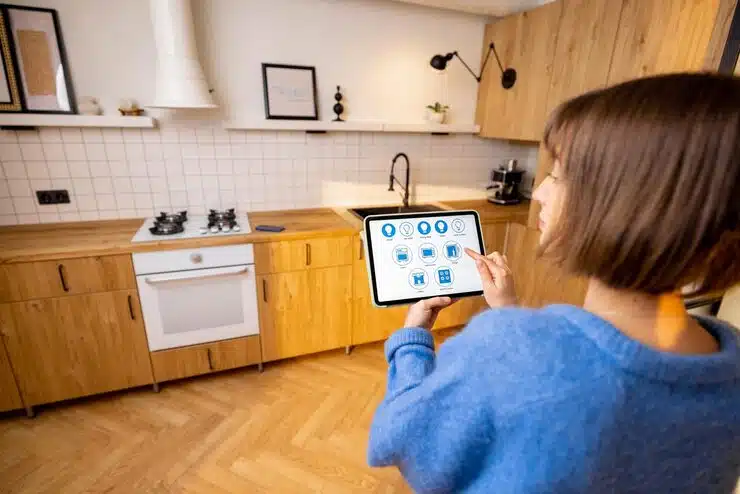
The Evolution: From Traditional to Smart Commercial Kitchens
Traditional commercial kitchens served the industry for decades but were built for a different era. Paper-based inventory systems, manual temperature logs, and reactive equipment maintenance created inefficiencies that operators simply accepted. The emergence of IoT kitchen equipment has fundamentally changed that equation. Restaurant automation technology means that every cubic inch of your kitchen can now be monitored, measured, and improved.
The transition happened across three clear phases:
- Standalone digital tools (POS systems, digital timers)
- Networked kitchen management systems (inventory software, scheduling apps)
- Fully integrated smart kitchen ecosystems (IoT sensors, AI analytics, cloud platforms)
Today, operators investing in smart kitchen technology for restaurants are entering the third and most powerful phase — one that delivers measurable results in every area of performance.
Key Smart Kitchen Technology for Restaurants: A Complete Overview
To truly understand the power of smart kitchen technology for restaurants, it helps to break down the major categories and what each delivers.
1. IoT Kitchen Equipment and Connected Appliances
IoT kitchen equipment forms the backbone of any smart commercial kitchen. These are standard appliances — combi ovens, refrigeration units, fryers, dishwashers, grills — enhanced with embedded sensors and wireless connectivity that feed data into a central connected kitchen system.
- Real-time temperature monitoring: Every piece of refrigeration and cooking equipment reports its temperature continuously, enabling immediate alerts if something deviates from safe parameters.
- Remote control and adjustment: Chefs and managers can adjust oven settings, activate proofing cycles, or modify holding temperatures from a tablet or smartphone.
- Usage analytics: Equipment usage patterns are tracked, helping managers identify peak periods, underutilized assets, and opportunities to reduce idle time.
- Predictive maintenance: Sensors detect abnormal vibrations, power spikes, or temperature fluctuations that precede equipment failure, enabling preventive action before costly breakdowns.
👉 Browse Smart Kitchen Appliances in UAE
👉 Explore Professional Cookware for Restaurants
2. Restaurant Automation Technology
Restaurant automation technology covers the software and hardware systems that take over repetitive, manual kitchen tasks — automated cooking systems, digital kitchen display systems (KDS), and AI-driven order management platforms.
Automated Cooking and Precision Control
Modern smart restaurant equipment like programmable combi ovens can store hundreds of recipes and execute them with pinpoint precision — controlling temperature, humidity, cooking time, and mode automatically. This eliminates variability caused by different staff skill levels.
Digital Kitchen Display Systems (KDS)
Digital KDS screens replace traditional paper tickets, routing orders intelligently based on station workload, priority, and preparation time. This component of restaurant automation technology significantly reduces ticket times and cuts order errors.
Automated Inventory and Ordering
Advanced connected kitchen systems integrate with inventory management platforms that track ingredient usage in real time. When stock falls below a set threshold, the system can automatically generate a purchase order — reducing waste, preventing stockouts, and saving hours of manual counting.
👉 Shop Professional Cooking Tools in UAE
👉 Find the Best Kitchen Accessories & More
3. Connected Kitchen Systems and Cloud Management
Connected kitchen systems are the central nervous system of a smart restaurant. They aggregate data from every IoT kitchen equipment device, every POS transaction, every supplier order, and every staff action — synthesizing it into a unified dashboard that gives management unprecedented visibility.
- Cloud-based management dashboard accessible from any device
- Real-time alerts and notifications for critical issues
- Historical data analysis and trend reporting
- Integration with accounting, payroll, and HR systems
- Multi-location management for restaurant chains
For growing restaurant brands in the UAE, connected kitchen systems are particularly valuable because they enable consistent standards across multiple locations without requiring managers to be physically present everywhere at once.
Smart Kitchen Technology for Restaurants: Transforming Food Safety
Food safety is arguably the most critical operational challenge for any commercial kitchen. Regulatory compliance in the UAE is stringent, and the reputational consequences of a food safety incident can be devastating. This is one area where smart kitchen technology for restaurants delivers its greatest value.
Automated Temperature Monitoring and HACCP Compliance
Manual temperature logging — a chef checking refrigerators with a probe thermometer and writing readings in a paper log — is time-consuming, inconsistent, and prone to error. IoT kitchen equipment automates this entirely.
Smart temperature sensors log readings every few minutes, 24 hours a day, 7 days a week. If a refrigerator temperature rises above safe levels — even at 3 AM when no one is in the kitchen — the system sends an immediate alert to the manager’s phone. Digital records are maintained automatically, creating a comprehensive, tamper-proof HACCP compliance log that’s always audit-ready.
Smart Labeling and Food Rotation Management
One of the most common causes of food waste and safety violations in restaurants is improper food rotation. Smart restaurant equipment integrated with labeling systems can automatically generate use-by labels based on preparation time, ingredient type, and local regulatory requirements — ensuring FIFO protocols are followed consistently.
Allergen Management Through Connected Kitchen Systems
Connected kitchen systems can integrate allergen management protocols directly into order routing, flagging dishes containing specific allergens and displaying warnings on kitchen display screens. This dramatically reduces the risk of dangerous allergen cross-contact incidents.
👉 Shop GN Containers for Safe Food Storage
👉 Browse Professional Food Containers
How Smart Kitchen Technology for Restaurants Reduces Costs
The upfront investment in smart kitchen technology for restaurants is a common barrier to adoption, but operators who analyze the total cost of ownership consistently find the ROI compelling. Here’s where the savings come from:
Energy Efficiency Through Intelligent Management
Commercial kitchens are notoriously energy-intensive. Restaurant automation technology addresses this through intelligent energy management — scheduling equipment to power down during off-peak hours, optimizing ventilation systems based on actual cooking activity, and identifying equipment drawing more power than it should.
Studies in the foodservice industry suggest that smart energy management systems can reduce kitchen energy consumption by 20–30%. For a busy UAE restaurant running commercial equipment for 12–16 hours a day, those savings are substantial.
Waste Reduction and Inventory Optimization
Food waste is one of the largest controllable costs in restaurant operations. Smart kitchen technology for restaurants attacks this problem on multiple fronts: precise portioning guidance, real-time inventory tracking, demand forecasting based on historical sales data and upcoming reservations, and automatic alerts when ingredients approach their expiration dates.
Labor Efficiency and Staffing Optimization
Restaurant automation technology doesn’t replace skilled kitchen staff — it makes them significantly more productive. By automating data collection, eliminating manual checks, streamlining communication between sections, and providing digital guidance for recipe execution, smart systems allow the same team to handle higher volume with fewer errors and less stress.
👉 Equip Your Kitchen With Professional Cookware
👉 Shop Professional Bakeware in UAE
Smart vs. Traditional Kitchen: At a Glance
| Feature | Traditional Kitchen | Smart Kitchen | ROI Timeline |
| Temperature Monitoring | Manual probe checks | 24/7 IoT sensors + alerts | Immediate |
| Inventory Management | Paper counts | Real-time auto-tracking | 3–6 months |
| Energy Management | Fixed schedules | AI-driven optimization | 6–12 months |
| Order Routing | Paper tickets | Digital KDS | 1–3 months |
| Maintenance | Reactive repairs | Predictive alerts | 6–18 months |
| Food Safety Logs | Manual paper logs | Automated digital records | Immediate |
Smart Restaurant Equipment: What to Prioritize First
For operators new to smart kitchen technology for restaurants, knowing where to start can feel overwhelming. The key is to prioritize investments based on where you’ll achieve the fastest ROI and the most meaningful operational improvements.
read more : How to Reduce Restaurant Kitchen Operating Costs Without Affecting Quality
Step-by-Step Prioritization Guide
- Temperature monitoring IoT sensors — immediate food safety and compliance benefits with relatively low investment.
- Digital Kitchen Display System (KDS) — reduce errors and improve ticket times in your existing setup.
- Smart-enabled cooking equipment — upgrade high-usage appliances like combi ovens, fryers, and grills.
- Inventory management software — gain real-time stock visibility integrated with your POS.
- Advanced AI analytics — layer in demand forecasting and optimization as your data foundation grows.
This phased approach lets you build confidence, train your team progressively, and fund later-stage investments with savings generated from earlier ones.
Choosing the Right Smart Restaurant Equipment Suppliers
Not all smart restaurant equipment is created equal. When evaluating suppliers and platforms, look for:
- Open APIs that allow integration with your existing POS and management systems
- Proven reliability and uptime guarantees — kitchen equipment cannot afford downtime during service
- Local UAE support and service infrastructure
- Scalability to grow with your business
- Comprehensive training and onboarding support
👉 Shop Professional Kitchen Knives in UAE
👉 Browse Commercial Cutting Boards
Smart Kitchen Technology for Restaurants: Elevating Guest Experience
While much of the conversation around smart kitchen technology for restaurants focuses on operational efficiency, its impact on the guest experience is equally profound — and arguably more commercially important.
Faster, More Consistent Food Quality
When restaurant automation technology ensures that every dish is cooked at the precise temperature and time specified in the recipe, consistency becomes a guarantee rather than a goal. Guests experience the same quality whether it’s their first visit or their fiftieth — and that consistency is the foundation of loyalty.
Reduced Wait Times
Smarter kitchens are faster kitchens. Connected kitchen systems that intelligently sequence orders, route tickets to the right stations, and predict completion times help front-of-house staff set accurate expectations with guests and reduce table turn times — increasing both revenue and guest satisfaction.
Personalization at Scale
AI-driven smart kitchen technology for restaurants can be integrated with loyalty systems and guest preference data, enabling kitchens to automatically flag personalization notes — preferred spice levels, dietary restrictions, favorite modifications — for returning guests. This level of personalized hospitality, delivered consistently and at scale, is a powerful differentiator in the UAE’s competitive dining market.
👉 Elevate Service With Premium Tableware
👉 Shop Restaurant-Grade Crockery in UAE
👉 Find Beautiful Glassware for Your Restaurant
IoT Kitchen Equipment and Smart Technology for Specific Restaurant Types
One of the great strengths of modern IoT kitchen equipment is its adaptability. Whether you run a fine dining establishment, a high-volume fast-casual concept, a hotel banqueting operation, or a cloud kitchen, there are smart kitchen technology for restaurants solutions tailored to your specific operational model.
Fine Dining Restaurants
Fine dining kitchens prioritize precision and consistency above all else. Smart restaurant equipment here focuses on precise temperature control for sous vide, exacting recipe execution, and sophisticated inventory management to protect high-value ingredients.
👉 Shop Professional Saucepans for Fine Dining
👉 Browse Premium Frypans for Commercial Use
High-Volume Casual Restaurants
Speed, consistency, and labor efficiency are the priorities here. Restaurant automation technology like automated fryers, intelligent conveyor ovens, and smart batch cooking equipment enables high-volume operators to serve hundreds of covers without sacrificing quality.
👉 Find Professional Cooking Pots for Large Scale
Hotel and Banquet Kitchens
The scale and complexity of hotel kitchen operations make connected kitchen systems particularly valuable. Managing food production for multiple outlets simultaneously — from room service to banqueting to pool bars — requires the real-time visibility and cross-department coordination that only smart technology can deliver.
👉 Shop Buffetware for Hotel Operations
Cloud Kitchens
Cloud kitchens are natural candidates for smart kitchen technology for restaurants. With no front-of-house to manage, operators can invest entirely in kitchen optimization, using IoT kitchen equipment and automation to maximize throughput, minimize labor, and maintain consistent quality across multiple virtual brands operating from the same kitchen.
👉 Browse Utensils for Professional Kitchens
Implementing Smart Kitchen Technology for Restaurants: A Practical Roadmap
Transitioning to a smart kitchen requires careful planning, stakeholder buy-in, and a phased implementation strategy. Here is a practical roadmap for UAE restaurant operators:
Phase 1: Assessment and Goal Setting (Weeks 1–4)
Conduct a thorough audit of your current kitchen operations. Identify your biggest pain points — food safety compliance, energy costs, inventory waste, inconsistent quality, or staffing challenges. Define clear, measurable goals that your smart kitchen technology for restaurants investment needs to achieve.
Phase 2: Technology Selection (Weeks 5–8)
Research and select the smart restaurant equipment and connected kitchen systems that best address your priorities. Request demonstrations, speak with reference customers, and ensure your chosen solutions integrate with your existing POS and management software.
Phase 3: Pilot Implementation (Months 3–4)
Deploy your chosen IoT kitchen equipment and restaurant automation technology in a controlled pilot environment — ideally one kitchen section or one location if you operate multiple sites. Collect data rigorously, gather staff feedback, and troubleshoot issues before full rollout.
Phase 4: Full Rollout and Training (Months 5–6)
With lessons from the pilot in hand, execute your full deployment. Invest heavily in staff training — the most sophisticated smart kitchen technology for restaurants will underperform if your team doesn’t know how to use it effectively. Create clear SOPs for using and maintaining the new systems.
Phase 5: Continuous Optimization (Ongoing)
Once your connected kitchen system is fully operational and your team is proficient, shift focus to continuous optimization. Use the data your system generates to identify new opportunities for efficiency, quality improvement, and cost reduction.
👉 Shop All Kitchen Accessories for Your Restaurant
👉 Explore Professional Barware in UAE
The Future of Smart Kitchen Technology for Restaurants
The pace of innovation in smart kitchen technology for restaurants shows no signs of slowing. Several emerging trends are poised to reshape commercial kitchen operations over the next five years:
AI-Powered Predictive Analytics
Current connected kitchen systems collect and report data. The next generation will use machine learning to make sophisticated predictions — forecasting equipment failure weeks in advance, optimizing menu mix based on weather and local events, and automatically adjusting production schedules in response to real-time demand signals.
Robotics Integration
While fully robotic kitchens remain largely experimental, targeted robotic applications — automated dishwashing systems, robotic prep stations for repetitive cutting tasks, automated plating tools — are already finding their way into commercial kitchens. These systems work alongside human staff, handling the most labor-intensive and repetitive tasks.
Augmented Reality Kitchen Guidance
AR systems that project recipe guidance, plating instructions, and quality checkpoints directly onto the workspace are beginning to move from concept to commercial reality. This technology promises to dramatically reduce training time and ensure consistent execution of complex recipes across different skill levels.
Blockchain-Enabled Supply Chain Transparency
The integration of blockchain technology with IoT kitchen equipment and inventory systems will create an unbroken chain of provenance data from farm to plate — enabling instant recall capabilities, automated sustainability reporting, and unprecedented transparency for guests who want to know exactly where their food comes from.
[IMAGE: smart kitchen technology for restaurants — future AI dashboard in commercial kitchen]
👉 Browse Coffee Accessories for Your Café
👉 Shop Premium Cutlery for Fine Dining Service
Frequently Asked Questions About Smart Kitchen Technology for Restaurants
Q: What is smart kitchen technology for restaurants?
A: Smart kitchen technology for restaurants refers to an integrated ecosystem of IoT-connected devices, automation systems, and AI-powered software platforms that monitor, manage, and optimize every aspect of commercial kitchen operations — from temperature monitoring and inventory management to order routing and energy efficiency.
Q: How much does it cost to implement smart restaurant equipment?
A: Costs vary widely based on kitchen size and scope. Entry-level IoT sensors and monitoring systems can start from a few thousand dirhams, while comprehensive connected kitchen systems for large operations may require six-figure investments. Most operators recover their investment within 12–24 months through energy savings, waste reduction, and labor efficiency gains.
Q: What are the main benefits of IoT kitchen equipment?
A: The primary benefits of IoT kitchen equipment include real-time temperature monitoring for food safety compliance, predictive maintenance to prevent costly equipment breakdowns, energy usage optimization, automated inventory tracking, and comprehensive data analytics that drive operational improvements across every area of kitchen performance.
Q: How does restaurant automation technology improve food safety?
A: Restaurant automation technology improves food safety by continuously monitoring and logging temperatures across all refrigeration and cooking equipment, automatically generating alerts when temperatures deviate from safe parameters, creating tamper-proof HACCP compliance records, and integrating allergen management protocols directly into order routing systems.
Q: Can small restaurants benefit from smart kitchen technology?
A: Absolutely. Smart kitchen technology is now accessible and scalable for small and independent operators. Many providers offer modular solutions that allow smaller kitchens to start with high-priority components — like temperature monitoring or digital KDS systems — and expand over time as ROI is realized.
Q: What is a connected kitchen system?
A: A connected kitchen system is a central platform that integrates all smart devices and software within a commercial kitchen into a unified network. It aggregates data from IoT equipment, POS systems, inventory platforms, and staff management tools to provide real-time visibility, automated reporting, and management insights through a single dashboard.
Q: How does smart kitchen technology reduce food waste?
A: Smart kitchen technology reduces food waste through precise inventory tracking that identifies ingredients approaching expiration, demand forecasting that aligns production with actual expected demand, portion control guidance integrated into recipe systems, and automated alerts that flag over-ordering patterns before they become costly problems.
Q: What types of restaurants benefit most from restaurant automation technology?
A: While all restaurant types benefit, high-volume operations — quick-service restaurants, hotel kitchens, banquet facilities, and cloud kitchens — tend to see the most dramatic ROI from restaurant automation technology, because the efficiency gains scale with volume. Fine dining restaurants benefit particularly from precision cooking and consistency features.
Q: Is smart restaurant equipment difficult for kitchen staff to learn?
A: Modern smart restaurant equipment is designed with usability in mind — featuring intuitive touchscreen interfaces, visual displays, and simple alert systems. Most operators report that staff adapt within 2–4 weeks. The key to successful adoption is investing in thorough training and creating clear standard operating procedures.
Q: How does smart kitchen technology help with UAE food safety regulations?
A: Smart kitchen technology directly supports UAE food safety compliance by automating HACCP temperature logging, creating digital audit-ready records, enabling real-time monitoring of critical control points, and generating automatic alerts when any monitored parameter falls outside safe ranges — ensuring compliance is maintained continuously, not just during inspections.
Q: What is the ROI timeframe for smart restaurant equipment?
A: Most operators report achieving positive ROI within 12–24 months of implementing smart restaurant equipment, with high-impact components like energy management and automated inventory controls delivering measurable savings within the first 3–6 months. The exact timeframe depends on kitchen size, current inefficiency levels, and the scope of implementation.
Q: Can smart kitchen technology integrate with existing POS systems?
A: Yes — most modern connected kitchen systems are designed with open APIs that allow integration with major POS platforms. Before selecting a solution, always verify compatibility with your existing POS and management software to ensure seamless data flow across your entire operation.
Conclusion: Embrace Smart Kitchen Technology for Restaurants Today
The commercial kitchen of tomorrow is being built today — and it’s smarter, more efficient, safer, and more profitable than anything that came before it. Smart kitchen technology for restaurants is no longer a luxury reserved for large chains with deep pockets. It’s an accessible, scalable investment that delivers measurable returns for operators of every size and concept type.
From IoT kitchen equipment that monitors your refrigeration around the clock, to connected kitchen systems that give you real-time visibility into every aspect of operations, to restaurant automation technology that streamlines workflows and elevates consistency — the tools exist right now to transform your kitchen into a genuine competitive advantage.
The restaurants winning in today’s market aren’t just serving great food. They’re operating intelligently, using smart kitchen technology for restaurants to control costs, guarantee quality, ensure safety, and create guest experiences that build lasting loyalty. The question is no longer whether to embrace smart kitchen technology — it’s how quickly you can get started.
Equip your kitchen with the right tools, trust the data, and watch your operation reach new heights of performance. If you found this guide valuable, share it with a fellow restaurateur, leave a comment below, and explore our full range of professional kitchen equipment at HorcaHut.
👉 Shop All Smart Kitchen Appliances — HorcaHut
👉 Browse Complete Cookware Collection


