







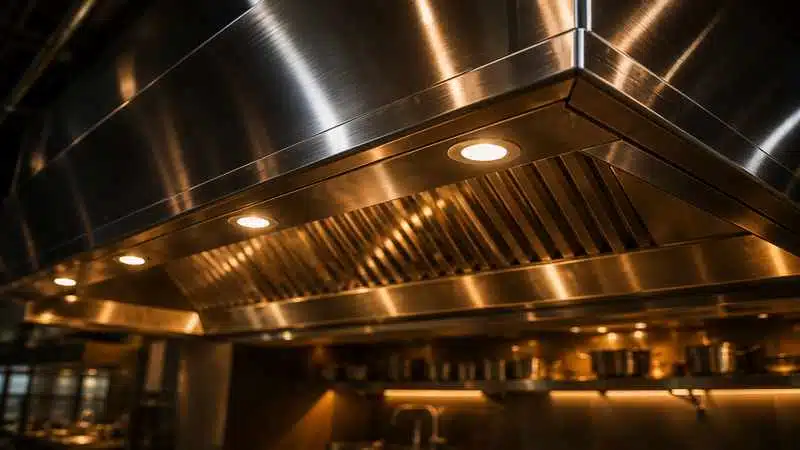

Behind every efficient commercial kitchen is a ventilation system that quietly performs one of the most important jobs in the entire operation. While chefs, cooking equipment, and food preparation often receive the most attention, the commercial kitchen exhaust hood is the component that keeps the entire kitchen operating safely, comfortably, and efficiently.
Every commercial cooking process produces heat, smoke, grease-laden vapors, steam, moisture, and airborne particles. Without a properly selected exhaust hood, these contaminants quickly accumulate, affecting employee comfort, food quality, equipment performance, and overall kitchen productivity.
This comprehensive restaurant exhaust hood guide explains everything restaurant owners, hotel operators, café investors, bakery businesses, cloud kitchen entrepreneurs, and hospitality developers need to know before investing in a commercial kitchen hood.
Whether you are opening a restaurant in Downtown Dubai, launching a café in Dubai Marina, developing a cloud kitchen in Al Quoz, building a hotel kitchen in Abu Dhabi, or expanding hospitality operations across Sharjah, Ajman, Ras Al Khaimah, Fujairah, Al Ain, or Umm Al Quwain, selecting the right exhaust canopy is one of the most important engineering decisions you will make.
At Horeca Hut, ventilation planning begins long before installation. Every commercial kitchen project includes detailed airflow analysis, cooking equipment assessment, hood selection, utility coordination, and workflow optimization to ensure restaurants receive a complete ventilation solution—not simply an exhaust hood.
Why Restaurant Exhaust Hoods Are Essential
Many restaurant owners mistakenly believe an exhaust hood is simply a metal canopy positioned above cooking equipment.
In reality, it is one of the most critical components of the entire kitchen ventilation system.
A properly selected hood captures:
- Heat
- Smoke
- Steam
- Grease particles
- Cooking fumes
- Odors
- Combustion gases
before they spread throughout the kitchen.
Without effective extraction, commercial kitchens become hotter, less efficient, and significantly more difficult to operate.
For the complete ventilation system, see our Commercial Kitchen Ventilation Systems guide, and for the stainless steel fabrication that often surrounds hood installations, review our Commercial Kitchen Stainless Steel Equipment guide. As one of the trusted Horeca Suppliers UAE, Horeca Hut supplies and installs exhaust hoods across the UAE.
Benefits of a Professional Kitchen Hood
A professionally designed kitchen hood UAE restaurants depend on provides numerous operational advantages.
These include:
- Improved indoor air quality
- Better employee comfort
- Lower kitchen temperatures
- Cleaner working environments
- Reduced grease accumulation
- Improved ventilation efficiency
- Better equipment performance
- Lower maintenance requirements
- Enhanced food safety
These advantages are especially valuable in the UAE, where high outdoor temperatures already place additional pressure on commercial kitchens.
Understanding Commercial Kitchen Exhaust Hoods
A commercial exhaust hood is the first collection point in the ventilation system.
It captures contaminated air before it enters the exhaust ductwork.
A complete hood system typically includes:
- Stainless steel hood canopy
- Grease filters
- Grease collection trays
- Exhaust connections
- Lighting
- Fire suppression integration
- Hanging supports
Each component contributes to overall ventilation performance.
How Restaurant Exhaust Hoods Work
Although the system appears simple, its operation is based on carefully engineered airflow.
The process generally follows these steps:
- Cooking equipment generates heat, smoke, steam, and grease.
- The exhaust hood captures contaminated air.
- Grease filters remove grease particles.
- Ductwork transports contaminated air.
- Exhaust fans discharge air outside.
- Fresh make-up air replaces exhausted air.
This continuous cycle maintains a balanced and comfortable kitchen environment.
Types of Commercial Kitchen Exhaust Hoods
Different commercial kitchens require different hood configurations.
Selecting the appropriate design depends on kitchen layout, cooking equipment, production volume, and available space.
Wall-Mounted Exhaust Hoods
Wall-mounted hoods are the most common option.
They are installed above equipment positioned against a wall.
Suitable for:
- Restaurants
- Cafés
- Bakeries
- Cloud kitchens
- Hotels
Advantages include:
- Efficient airflow
- Easy installation
- Excellent grease capture
- Cost-effective design
Island Exhaust Hoods
Island hoods are suspended above centrally located cooking equipment.
Common applications include:
- Hotel kitchens
- Exhibition kitchens
- Open kitchens
- Large production kitchens
Benefits include:
- Air capture from multiple directions
- Flexible equipment placement
- Improved chef visibility
Condensate Hoods
Condensate hoods are designed primarily for equipment producing steam rather than grease.
Common applications include:
- Combination ovens
- Steamers
- Dishwashing systems
These hoods focus on moisture removal instead of grease extraction.
Custom Commercial Exhaust Canopies
Large hospitality projects often require custom-designed exhaust canopy commercial kitchen solutions.
Custom systems may be developed for:
- Central production kitchens
- Hotel banquet kitchens
- Catering facilities
- Institutional kitchens
- Multi-concept restaurants
These projects usually require detailed engineering and airflow calculations.
Choosing the Right Kitchen Hood UAE Businesses Need
Selecting an exhaust hood involves much more than matching the hood width to the cooking equipment.
Professional planners evaluate several critical factors before recommending a solution.
Type of Cooking Equipment
Different appliances generate different levels of heat and grease.
Equipment such as:
- Fryers
- Charbroilers
- Grills
- Wok ranges
- Heavy-duty ranges
requires more intensive extraction than steam-producing appliances.
Kitchen Layout
The overall commercial kitchen layout directly affects hood selection.
Engineers evaluate:
- Ceiling height
- Cooking line configuration
- Available wall space
- Airflow direction
- Staff circulation
This ensures the hood integrates efficiently into the kitchen.
Production Capacity
Restaurants serving hundreds of meals daily generate much higher ventilation loads than smaller cafés.
Commercial hood selection should reflect:
- Peak production
- Cooking intensity
- Operating hours
- Future expansion
Planning only for current demand often creates future limitations.
Airflow Requirements
Every commercial kitchen requires a balanced airflow strategy.
Professional calculations determine:
- Exhaust volume
- Fresh air supply
- Air pressure balance
- Fan capacity
These factors directly influence hood performance.
Commercial Kitchen Hood Materials
Most professional kitchen hoods are manufactured from stainless steel.
Benefits include:
- Corrosion resistance
- Easy cleaning
- Long lifespan
- Hygienic surfaces
- Professional appearance
High-quality stainless steel also supports easier maintenance and better long-term durability.
Grease Filters and Their Importance
Grease filters are essential components of every commercial kitchen exhaust hood.
They help:
- Capture grease particles
- Protect ductwork
- Improve airflow
- Reduce cleaning frequency
- Improve fire safety
Routine cleaning keeps the system operating efficiently.
Hood Lighting
Modern commercial kitchen hoods frequently include integrated lighting.
Proper lighting improves:
- Food preparation accuracy
- Employee safety
- Visibility during service
- Cleaning quality
Well-lit cooking stations also improve operational efficiency.
Common Equipment Requiring Exhaust Hoods

Commercial exhaust hoods are typically installed above:
- Cooking ranges
- Fryers
- Charbroilers
- Griddles
- Salamanders
- Wok stations
- Tilting pans
- Bratt pans
- Combination ovens
Each appliance contributes differently to ventilation demand.
Common Restaurant Exhaust Hood Buying Mistakes
Restaurant owners often make expensive purchasing mistakes when selecting ventilation equipment.
Common examples include:
- Buying based only on price
- Ignoring airflow calculations
- Selecting undersized hoods
- Poor hood positioning
- Ignoring future expansion
- Choosing equipment without engineering consultation
- Delaying ventilation planning until after kitchen construction
Professional planning helps avoid these costly issues.
Restaurant Ventilation Trends Across Dubai and the UAE
Hospitality businesses across Dubai, Abu Dhabi, Sharjah, Ajman, Ras Al Khaimah, Fujairah, Al Ain, and Umm Al Quwain increasingly invest in:
- Smart exhaust hood controls
- Energy-efficient ventilation
- Variable-speed exhaust systems
- Low-noise kitchen ventilation
- Sustainable airflow management
- Integrated kitchen monitoring
These technologies improve both operational efficiency and employee comfort.
How to Choose the Correct Exhaust Hood Size
One of the biggest misconceptions when purchasing a commercial kitchen exhaust hood is assuming that a larger hood always delivers better performance.
In reality, selecting the correct hood size depends on several engineering factors rather than dimensions alone.
Professional kitchen designers evaluate the entire cooking operation before recommending an exhaust canopy.
Factors That Influence Hood Size
The correct hood depends on:
- Cooking equipment type
- Total cooking line length
- Heat output
- Smoke production
- Grease generation
- Kitchen ceiling height
- Airflow requirements
- Production capacity
A properly sized hood captures contaminants efficiently while maintaining balanced airflow throughout the kitchen.
Matching the Hood to Cooking Equipment
Every cooking appliance produces different ventilation demands.
Restaurants should never use a one-size-fits-all approach.
Heavy-Duty Cooking Equipment
Equipment such as:
- Charbroilers
- Charcoal grills
- Deep fryers
- Wok ranges
- Heavy-duty ranges
generates large amounts of grease, smoke, and heat.
These appliances require high-performance exhaust systems.
Medium-Duty Cooking Equipment
Examples include:
- Griddles
- Combination ovens
- Tilting pans
- Pasta cookers
These require balanced extraction designed around production intensity.
Steam-Producing Equipment
Equipment such as:
- Steamers
- Combination ovens
- Commercial dishwashers
primarily generates moisture rather than grease.
These applications often require condensate hoods or specialized ventilation designs.
Understanding Air Capture Efficiency
The purpose of a commercial kitchen hood is not simply removing air.
Its primary function is capturing contaminants before they spread into the kitchen.
Efficient air capture depends on:
- Proper hood positioning
- Correct airflow
- Equipment spacing
- Hood design
- Kitchen layout
Poor air capture reduces ventilation efficiency regardless of fan size.
The Importance of Hood Placement
Even the highest-quality exhaust hood performs poorly if installed incorrectly.
Professional installation positions the hood directly above cooking equipment while considering:
- Cooking line arrangement
- Staff movement
- Maintenance access
- Ceiling height
- Utility coordination
Correct placement improves smoke capture and grease extraction.
Kitchen Exhaust Hood Maintenance
Routine maintenance is essential for maintaining ventilation performance.
Without regular servicing, grease accumulation reduces airflow while increasing cleaning requirements.
Regular Maintenance Tasks
Professional servicing generally includes:
- Grease filter cleaning
- Hood surface cleaning
- Grease tray inspection
- Duct inspection
- Exhaust fan servicing
- Airflow testing
- Fastener inspection
Preventive maintenance improves reliability and extends system lifespan.
Cleaning Commercial Exhaust Canopies
Cleaning is one of the most important maintenance activities.
A clean hood performs more efficiently and supports better kitchen hygiene.
Cleaning typically focuses on:
- Stainless steel surfaces
- Grease filters
- Collection trays
- Internal hood surfaces
- Accessible duct connections
Routine cleaning also improves the professional appearance of the kitchen.
Signs Your Exhaust Hood Needs Servicing
Restaurant operators should monitor hood performance regularly.
Common warning signs include:
- Excess smoke in the kitchen
- Increased cooking odors
- Grease buildup around equipment
- Reduced airflow
- High kitchen temperatures
- Unusual fan noise
- Visible grease accumulation
Early servicing prevents more serious operational problems.
Fire Safety Considerations
Commercial cooking continuously produces grease-laden vapors.
Without proper capture and maintenance, grease accumulates inside ventilation systems.
Professional hood systems support safer kitchen environments through:
- Effective grease filtration
- Accessible cleaning
- Balanced airflow
- Proper exhaust routing
- Integration with overall kitchen safety planning
Regular maintenance helps preserve system performance while reducing operational risks.
Energy Efficiency and Modern Exhaust Hood Systems

Modern restaurants increasingly seek ventilation systems that improve performance while reducing operating costs.
Today’s commercial exhaust hoods often support:
- Variable airflow control
- LED lighting
- Improved grease filtration
- Better airflow management
- Lower operating noise
These technologies help restaurants create more efficient commercial kitchens.
Common Exhaust Hood Buying Mistakes
Many restaurant owners unknowingly purchase the wrong ventilation system because they focus only on equipment pricing.
Understanding these mistakes helps avoid expensive redesigns.
Buying Without Professional Planning
Commercial kitchen ventilation should always be engineered alongside the overall kitchen layout.
Selecting a hood without evaluating workflow, cooking equipment, and airflow often leads to poor performance.
Choosing the Lowest Price
The least expensive hood may not provide the airflow performance required for long-term operation.
Restaurants should evaluate total lifecycle value rather than initial purchase cost.
Ignoring Future Expansion
Restaurants frequently add cooking equipment after opening.
Professional ventilation planning considers future production growth whenever possible.
Overlooking Maintenance Accessibility
A hood that is difficult to clean becomes more expensive to maintain over time.
Easy maintenance access should always be considered during design.
Delaying Hood Selection
The exhaust hood influences duct routing, utility planning, ceiling coordination, and kitchen layout.
For this reason, hood selection should occur early in the project.
Commercial Kitchen Exhaust Hood Trends in the UAE
Restaurants throughout Dubai, Abu Dhabi, Sharjah, Ajman, Ras Al Khaimah, Fujairah, Al Ain, and Umm Al Quwain increasingly invest in advanced ventilation technologies.
Current industry trends include:
- Smart exhaust hood monitoring
- Energy-efficient ventilation systems
- Variable-speed exhaust fans
- Low-noise airflow systems
- High-efficiency grease filtration
- Integrated building automation
- Sustainable commercial kitchen engineering
These innovations improve operational efficiency while supporting long-term business growth.
Why Horeca Hut Is the Ideal Partner for Restaurant Exhaust Hood Systems
Selecting the right commercial kitchen exhaust hood requires much more than choosing a stainless-steel canopy.
It requires engineering expertise, airflow analysis, workflow planning, hospitality experience, and complete project coordination.
This is exactly what Horeca Hut delivers.
Unlike companies that simply supply kitchen ventilation products, Horeca Hut develops complete commercial kitchen solutions where exhaust hoods work as part of an integrated ventilation ecosystem.
Its services include:
- Restaurant exhaust hood consultation
- Kitchen hood UAE solutions
- Exhaust canopy commercial kitchen design
- Commercial kitchen ventilation systems
- Airflow engineering
- Kitchen layout planning
- Utility coordination
- Commercial kitchen equipment supply
- Professional installation
- Preventive maintenance and technical support
Whether developing a restaurant in Downtown Dubai, opening a café in Dubai Marina, launching a cloud kitchen in Al Quoz, building a hotel kitchen in Abu Dhabi, expanding a bakery in Sharjah, creating a catering facility in Ajman, investing in a hospitality project in Ras Al Khaimah, opening a restaurant in Fujairah, establishing operations in Al Ain, or expanding anywhere across the UAE, Horeca Hut provides customized ventilation solutions designed around each project’s unique operational needs.
Every Horeca Hut project begins with a comprehensive technical consultation.
The engineering team evaluates:
- Restaurant concept
- Menu requirements
- Cooking equipment
- Heat generation
- Kitchen dimensions
- Ceiling configuration
- Airflow calculations
- Utility infrastructure
- Future expansion plans
Only after understanding these operational factors does Horeca Hut recommend the appropriate exhaust hood solution.
This consultative approach allows hospitality businesses to achieve:
- Superior air quality
- Efficient grease capture
- Improved employee comfort
- Better kitchen workflow
- Lower operating costs
- Longer equipment lifespan
- Greater energy efficiency
Rather than functioning as a traditional equipment supplier, Horeca Hut becomes a trusted long-term hospitality partner, supporting businesses through planning, engineering, installation, maintenance, and future expansion.
Conclusion
A professionally selected commercial kitchen exhaust hood is one of the most important investments for any restaurant, hotel, café, bakery, cloud kitchen, or catering facility.
The right hood improves air quality, captures grease efficiently, supports food safety, protects kitchen equipment, and creates a more comfortable working environment for employees.
Whether operating hospitality businesses across Dubai, Abu Dhabi, Sharjah, Ajman, Ras Al Khaimah, Fujairah, Al Ain, or Umm Al Quwain, investing in the correct kitchen hood UAE solution delivers measurable long-term operational benefits.
By partnering with Horeca Hut, restaurant owners gain access to complete ventilation engineering, premium exhaust canopy systems, professional installation, workflow optimization, and ongoing technical support—ensuring commercial kitchens remain efficient, compliant, and ready for sustainable growth.
Frequently Asked Questions
What is a commercial kitchen exhaust hood?
A commercial kitchen exhaust hood is a ventilation component installed above cooking equipment to capture heat, smoke, grease, steam, and cooking odors before they spread throughout the kitchen.
Why is an exhaust hood important in restaurants?
An exhaust hood improves air quality, reduces kitchen temperatures, captures grease, enhances employee comfort, and supports efficient commercial kitchen operations.
How do I choose the right kitchen hood?
The right hood depends on your cooking equipment, production capacity, kitchen layout, airflow requirements, and future expansion plans.
What is the difference between an exhaust hood and a condensate hood?
Exhaust hoods are designed for grease-producing cooking equipment, while condensate hoods primarily remove steam and moisture generated by equipment such as steamers and commercial dishwashers.
Which restaurant equipment requires an exhaust hood?
Cooking ranges, fryers, charbroilers, grills, wok stations, salamanders, and many other high-heat appliances typically require exhaust hood systems.
How often should commercial exhaust hoods be cleaned?
Commercial exhaust hoods should be inspected and cleaned regularly to maintain airflow efficiency, reduce grease buildup, and support reliable operation.
Can exhaust hood systems improve energy efficiency?
Yes. Modern exhaust systems help optimize airflow, reduce heat buildup, improve HVAC performance, and support more energy-efficient kitchen operations.
What are common mistakes when buying an exhaust hood?
Common mistakes include choosing based only on price, selecting an undersized hood, ignoring airflow calculations, delaying ventilation planning, and overlooking future expansion.
Who needs a commercial kitchen exhaust hood?
Restaurants, cafés, hotels, bakeries, cloud kitchens, catering companies, hospitals, schools, and institutional kitchens all benefit from professionally designed exhaust hood systems.
Why choose Horeca Hut for commercial kitchen exhaust hoods?
Horeca Hut provides complete commercial kitchen ventilation solutions, including airflow engineering, exhaust hood selection, kitchen planning, installation, maintenance, and long-term technical support for hospitality businesses throughout the UAE.


