










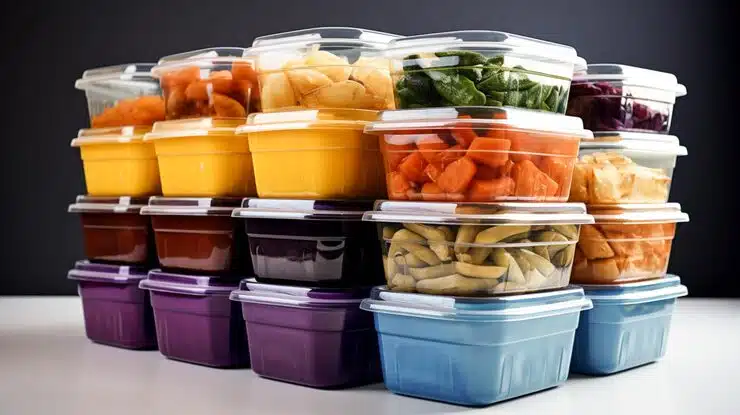
Open a commercial refrigerator in any well-run café kitchen and you’ll immediately understand the difference between a professional operation and an amateur one. In a high-performing café, every shelf is organised with clearly labelled, date-marked, perfectly stacked food containers for cafes — polycarbonate, stainless steel, and GN containers all neatly arranged by ingredient type, ready for immediate use. In a struggling operation, you find mismatched bowls covered in cling film, unlabelled jars, and a chaotic mix of containers that make finding anything a frustrating chore.
That difference matters more than most café owners realise. Poor food storage is one of the leading causes of food waste in hospitality businesses — research from WRAP (Waste and Resources Action Programme) indicates that food service businesses waste between 18% and 25% of purchased food, with storage failures being a primary contributor. For a café operating on tight margins, that waste directly impacts profitability.
But the right food containers for cafes don’t just reduce waste. They protect food safety and hygiene compliance, accelerate prep workflows, improve team communication about ingredient availability, and extend the shelf life of perishable ingredients. In this comprehensive guide, we’ll walk through every aspect of professional café food storage — the different container types, their optimal uses, food safety requirements, and how to build a storage system that serves your operation for years.
Why Food Containers for Cafes Are a Critical Investment
Food storage is often one of the last things café owners think about when setting up their kitchen — and one of the first things they regret underinvesting in. The financial case for investing in quality containers is straightforward: if proper storage reduces food waste by even 5%, the savings in a typical small café easily cover the cost of a professional container system within the first few months.
Beyond cost, food containers for cafes are central to food safety compliance. In most jurisdictions, including the UAE, commercial kitchen operators are required to store food in sealed, food-safe containers that prevent cross-contamination, protect against pests, and maintain food at safe temperatures. Failing to meet these requirements can result in health inspection failures, fines, and reputational damage — consequences that far outweigh the cost of professional containers.
The operational benefits are equally significant. A well-organised container system reduces the time staff spend searching for ingredients, minimises the risk of prep errors (using yesterday’s sauce instead of today’s fresh batch), and makes stock rotation (FIFO — first in, first out) effortless. These operational improvements compound daily into significant efficiency gains.
read more : Best Glassware for Cafes and Coffee Shops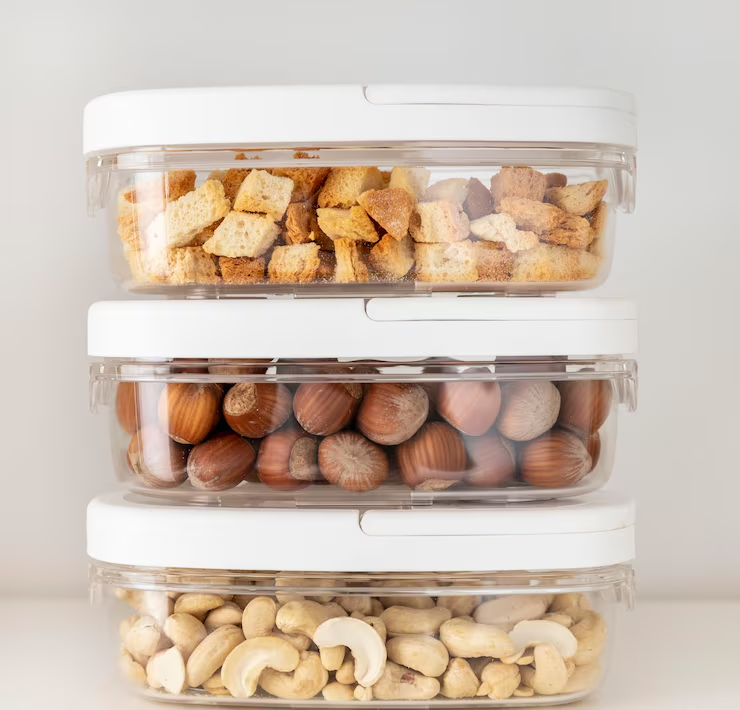
The True Cost of Poor Food Storage in Cafes
To understand the true value of professional food containers, consider the full cost of inadequate storage: direct food waste (ingredients spoil before use), hidden labour waste (staff time spent managing disorganised storage), food safety risks (cross-contamination, incorrect temperatures), and the reputational risk of ever serving food that has been improperly stored. Against these costs, the investment in a comprehensive container system is clearly justified — and typically pays for itself within the first quarter of operation.
Types of Food Containers for Cafes: A Complete Overview
GN (Gastronorm) Containers: The Professional Standard
Gastronorm containers are the most important category of food containers for cafes that operate at a professional level. The Gastronorm standard was established in Europe and is now used worldwide as the universal sizing system for commercial food storage and service equipment. GN containers follow a strict size matrix: the 1/1 full-size container (530mm x 325mm) is the base unit, and all other sizes are fractions of this — 1/2, 1/3, 1/4, 1/6, and 1/9, as well as different depth options from 20mm to 200mm.
This standardisation is enormously practical. GN containers fit precisely into commercial refrigerators, bain-maries, hot holding units, and prep station inserts. Lids are interchangeable across containers of the same footprint, reducing the clutter of mismatched lid collections. And because every professional supplier uses the same sizing, replacement parts are always available.
For café kitchens, GN containers are used for: prepped ingredient storage in refrigerators, hot and cold food holding in service, mise en place organisation on prep stations, and batch cooking storage. Stainless steel GN containers are ideal for hot holding and cooking applications; polycarbonate GN containers (transparent) are preferred for refrigerator storage where visual identification of contents is important.
| 🛒 Equip your café kitchen with professional GN containersShop Best GN Containers in UAE → |
Polycarbonate and Cambro-Style Containers
Polycarbonate containers — often referred to by the brand name Cambro, which is the market leader in this category — are among the most versatile food containers for cafes. Their transparency is their defining advantage: staff can immediately see the contents and quantity level without opening the container. This speeds up prep, reduces the chance of grabbing the wrong ingredient, and makes stock management easier.
These containers are available in a wide range of sizes from small (2 litre) to very large (22 litre) round and square formats. Square containers are particularly efficient for storage because they stack neatly and use refrigerator space more efficiently than round alternatives. They are typically made from BPA-free polycarbonate, which is food-safe, shatter-resistant, and dishwasher-safe.
Cambro-style containers are ideal for: bulk dry goods storage (rice, flour, sugar, coffee beans), prepped ingredient storage in refrigerators, soups and sauces, marinating proteins, and organising mise en place. Their tight-fitting lids seal in freshness and prevent cross-contamination.
| 🛒 Find professional Cambro-style containers for your caféBrowse Best Cambro Containers in UAE → |
Container Lids: Often Overlooked, Always Essential
The lid is as important as the container itself — yet it’s one of the most commonly underinvested-in elements of café food storage. Improperly fitted or missing lids allow odours to transfer between foods in refrigerators, accelerate spoilage, increase the risk of cross-contamination, and fail food safety inspections. For every container in your kitchen, you need a matching, properly sealing lid.
Different lid types serve different purposes: flat snap-on lids for standard refrigerator storage, peel-cover lids for buffet service, and insulated lids for temperature-sensitive storage. For GN containers used in bain-maries or hot holding units, lids with steam holes prevent excessive condensation buildup.
| 🛒 Complete your container system with matching lidsFind Best Container Lids in UAE → |
Stainless Steel Containers for Professional Kitchens
Stainless steel containers represent the traditional professional kitchen standard and remain essential for certain applications. Unlike polycarbonate containers, stainless steel is compatible with high heat — stainless steel GN containers can go directly from refrigerator to oven or bain-marie, making them extremely versatile. They’re also virtually indestructible in normal kitchen use, non-porous (won’t absorb odours or stains), and easy to sanitise. Food containers for cafes made from stainless steel are particularly valued for: hot food holding, cooking and baking preparation, transporting hot foods, and storing acidic foods that might react with other materials.
read more : Essential Food Prep Tools for Coffee Shop Kitchens
Food Container Categories Every Cafe Kitchen Needs
A well-equipped café kitchen needs food containers for cafes across multiple categories to handle all aspects of food storage effectively. Here’s the complete breakdown:
Refrigerator Organisation Containers
The refrigerator is where most food safety failures begin. Without proper containers, prepped ingredients sit in inappropriate vessels, temperatures are harder to maintain consistently, and cross-contamination risks multiply. A professional refrigerator container system for a café should include: GN containers in multiple sizes for prepped ingredients and batch cooked items, polycarbonate containers for bulk ingredients and sauces, airtight containers for dairy and high-risk foods, and clearly labelled dry good containers for herbs, spices, and garnishes.
• Full GN 1/1 containers for large batch items (soups, stocks, stews)
• GN 1/2 containers for medium-volume prepped ingredients
• GN 1/3 and 1/6 containers for mise en place and garnishes
• Polycarbonate square containers (2L, 4L, 8L) for bulk ingredients
• Airtight containers for sensitive ingredients like fresh herbs and dairy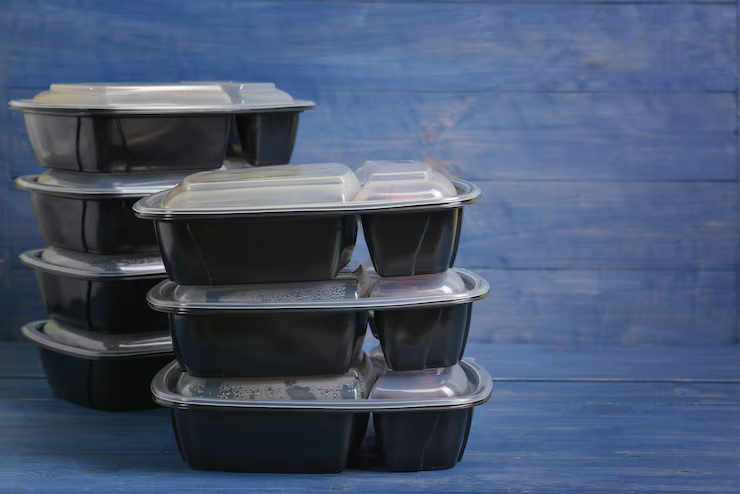
Dry Goods Storage Containers
Dry goods represent a significant portion of any café’s ingredient costs — coffee beans, flour, sugar, rice, pasta, nuts, dried fruits, and spices. Proper storage containers for dry goods prevent moisture ingress (which causes spoilage and clumping), protect against pests, maintain freshness, and allow for easy stock management. For dry goods, airtight containers with locking lids are essential.
For coffee beans specifically — a critical ingredient in any café — proper storage is particularly important. Coffee beans degrade rapidly when exposed to air, moisture, light, and heat. Airtight, opaque containers stored in cool conditions preserve bean freshness and flavour significantly longer than improper storage.
| 🛒 Find the right containers for all your café storage needsExplore Best Containers in UAE → |
Hot Food Holding and Service Containers
If your café serves hot foods — soups, hot sandwiches, egg dishes — or operates a buffet service, you need containers specifically designed for hot food holding. For buffet and catering applications, food containers for cafes used for hot holding must maintain safe temperatures (above 63°C) and be designed for use with bain-maries or chafing dishes. Stainless steel GN containers are ideal for these applications. For a café buffet setup, pair GN containers with chafing dishes, serving utensils, and appropriate buffetware for a professional presentation.
| 🛒 Discover professional buffetware for your café serviceShop Best Buffetware in UAE → |
Food Safety Standards for Food Containers for Cafes
Material Safety Requirements
Not all food containers are created equal when it comes to safety. For café kitchens, all containers used for food storage must meet these material requirements:
• BPA-free — Bisphenol A is a chemical found in some plastics that can leach into food; all professional food containers should be certified BPA-free
• Food-grade certification — containers must be made from materials approved for food contact by relevant food safety authorities
• Non-porous — materials that don’t absorb odours, flavours, or bacteria
• Temperature-rated — containers should be clearly rated for the temperatures they’ll be used at (freezer, refrigerator, oven, dishwasher)
• Non-reactive — materials that won’t react with acidic or alkaline foods to affect flavour or safety
Labelling and Date-Marking Requirements
In professional kitchens, all stored food must be labelled with the item name, preparation date, use-by date, and any allergen information. This is both a food safety requirement in most jurisdictions and a critical operational tool for stock rotation. Many cafés use waterproof labels and permanent markers; others use integrated label holders built into their container systems.
The FIFO (First In, First Out) principle must be consistently applied — older stock is always moved forward, newer stock placed behind. A good labelling system makes FIFO simple and automatic for kitchen staff.
Cleaning and Sanitisation of Food Containers
All food containers for cafes must be cleaned and sanitised after every use. Most professional-grade polycarbonate and stainless steel containers are dishwasher-safe, but high-temperature dishwashing (above 70°C) is required to achieve sanitisation, not just cleaning. For containers used for raw proteins or high-risk foods, manual sanitisation with an approved food-safe sanitiser should follow dishwashing.
Inspect containers regularly for cracks, chips, or scratches in plastic containers — these harbour bacteria and should trigger replacement. Stainless steel containers showing signs of pitting or corrosion should also be replaced.
read more : Kitchen Tools Every Small Cafe Kitchen Needs
Comparison: Food Containers for Cafes by Type
| Container Type | Best Use | Temperature Range | Key Advantage |
| GN Stainless Steel | Hot holding, bain-marie, cooking | Freezer to oven (up to 300°C) | Heat-compatible, ultra-durable |
| GN Polycarbonate | Refrigerator storage, cold prep | Freezer to 99°C | Transparent, lightweight |
| Cambro Square Polycarbonate | Bulk storage, dry goods, liquids | Freezer to 99°C | Stackable, space-efficient |
| Cambro Round Polycarbonate | Soups, sauces, liquids | Freezer to 99°C | Easy pouring, multiple sizes |
| Stainless Steel Mixing Bowls | Mixing, marinating, prep | Freezer to oven | Versatile, non-reactive |
| Airtight Dry Goods Containers | Coffee beans, flour, sugar, spices | Room temperature | Moisture-proof, pest-proof |
Organising Food Containers for Cafes: A System That Works
Zoning Your Storage by Food Category
Professional café kitchens organise their storage by food zone — each zone has designated containers, clearly labelled positions, and specific protocols. A typical café storage zoning system includes: Zone 1 (dairy and eggs, bottom shelf of refrigerator), Zone 2 (raw proteins, separate from other foods), Zone 3 (prepped vegetables and salads), Zone 4 (cooked and ready-to-serve foods), and Zone 5 (dry goods on designated shelving).
Within each zone, containers are standardised — the same types and sizes are always used for the same categories. This allows any team member to find and use any ingredient without needing supervision or training on the storage system.
Building a Container Inventory That Meets Your Volume
How many food containers for cafes do you actually need? As a guideline for a small café serving 40–80 covers per service:
• GN 1/1 full-size containers: 8–12 units with matching lids
• GN 1/2 containers: 10–15 units with matching lids
• GN 1/3 containers: 12–18 units with matching lids
• GN 1/6 and 1/9 containers: 8–12 units for garnishes and small-volume items
• Polycarbonate square containers (2L–8L): 15–20 units
• Dry goods containers (various sizes): 10–20 units
• Total approximate investment: 60–80 containers across all types
How Food Containers for Cafes Connect to the Full Kitchen Ecosystem
Containers don’t exist in isolation — they’re part of a broader kitchen ecosystem that includes the tools used to prepare and cook the food stored within them. Your containers need to work seamlessly with your cookware, prep tools, refrigeration, and service equipment.
Containers and Cookware Integration
When selecting containers, consider how they integrate with your cookware. GN containers that fit your bain-marie simplify hot service enormously — food can be prepared and stored in the same container used to serve it. Similarly, containers that fit your refrigerator shelves perfectly (without wasted space) maximise your refrigeration capacity.
| 🛒 Find cookware that pairs perfectly with your container systemBrowse Best Cookware in UAE → |
Containers and Kitchen Accessories
The right kitchen accessories — ladles, tongs, portion scoops, and serving spoons — need to be sized appropriately for your containers. A large ladle is ideal for serving from a full GN container of soup; smaller spoons and scoops are better for half and third-size containers of sauces and garnishes. Building your accessory kit alongside your container system ensures everything works together.
| 🛒 Shop professional kitchen accessories for your caféExplore Best Kitchen Accessories in UAE → |
Containers and Service Tableware
For cafés that operate buffet services or catering events, the connection between storage containers and service tableware is direct. GN containers in bain-maries, paired with matching tableware for individual plating, create a professional service flow. Invest in tableware that complements your service style and container system.
| 🛒 Discover premium tableware for your café serviceFind Best Tableware in UAE → |
Buying Guide: Choosing Food Containers for Cafes
Key Criteria for Evaluating Food Containers
When selecting containers for your café, evaluate each option against these criteria:
• Food safety certification — NSF International or equivalent certification confirms food-grade compliance
• Temperature ratings — ensure containers are rated for your full range of uses (freezer storage, hot holding, dishwasher)
• Stackability — containers that stack securely save space and reduce accidents
• Lid compatibility — lids should create an effective seal without being difficult to remove under service conditions
• Transparency — for refrigerator storage, transparent containers significantly speed up ingredient identification
• Durability — look for thick walls, reinforced rims, and impact-resistant materials
• Ease of cleaning — dishwasher-safe and smooth interior surfaces that don’t harbour food residue
• Availability of replacement parts — ensure the supplier has consistent stock of matching lids and accessories
Common Mistakes When Buying Food Containers for Cafes
Avoid these common purchasing mistakes:
• Buying without a system — purchasing random sizes and types creates an incompatible collection that doesn’t work efficiently together
• Underestimating quantity — cafés frequently underorder containers and find themselves improvising with inappropriate alternatives
• Prioritising price over quality — cheap containers crack, warp, and fail quickly, creating ongoing replacement costs
• Ignoring lid requirements — ordering containers without ordering matching lids
• Not considering temperature ratings — using containers outside their rated temperature range causes warping and potential food safety issues
Frequently Asked Questions
What are the best food containers for cafes?
The best food containers for cafes combine stainless steel GN containers for hot holding and cooking applications, polycarbonate GN containers for refrigerator storage, Cambro-style square polycarbonate containers for bulk ingredient and sauce storage, and airtight containers for dry goods. The ideal solution uses all these types in an organised, zoned storage system.
What size GN containers does a small cafe need?
A small café needs GN containers in 1/1 (full), 1/2, 1/3, 1/6, and 1/9 sizes, each in at least two depth options (65mm and 100mm). The 1/2 and 1/3 sizes are the most versatile for typical café prep volumes. Start with 8–12 units in each size and expand based on your specific menu and prep volumes.
Are polycarbonate food containers safe for cafes?
Yes. Professional polycarbonate containers used in commercial kitchens are BPA-free and food-safe. They’re rated for temperatures from -40°C to +99°C, making them suitable for freezer storage through light hot holding. Always check that containers carry relevant food safety certifications before purchasing.
How should I label food containers in a cafe kitchen?
Use waterproof, food-safe labels or a label printer to mark each container with: item name, preparation date, use-by date, and any allergen information. Apply FIFO (First In, First Out) principles consistently — always position newer stock behind older stock. Replace labels every time the container is refilled.
How many food containers does a small cafe need?
For a small café serving 40–80 covers, plan for approximately 60–80 food containers for cafes across all types: 30–45 GN containers in various sizes (with matching lids), 15–20 polycarbonate Cambro-style containers, and 10–20 dry goods/specialty containers. Build redundancy into critical sizes to ensure you always have clean containers available during busy service.
What is the difference between GN and Cambro containers?
GN (Gastronorm) containers follow an international standardised size matrix. Cambro is a brand name that has become generic for polycarbonate food storage containers (similar to how ‘Hoover’ became generic for vacuum cleaners). Many Cambro-style containers also follow GN sizing, making them compatible with GN accessories. The main distinctions are material (Cambro: polycarbonate; GN: available in stainless steel or polycarbonate) and primary use context.
Can cafe food containers go in the dishwasher?
Most professional polycarbonate and stainless steel café containers are dishwasher-safe. However, check the temperature rating — some polycarbonate containers can warp in very high-temperature commercial dishwashers. Stainless steel containers are more temperature-tolerant in dishwashers. Always follow manufacturer guidelines for cleaning.
What food containers do I need for a cafe fridge?
For refrigerator storage, prioritise transparent polycarbonate containers that allow visual identification without opening. GN polycarbonate containers in 1/2, 1/3, and 1/6 sizes are ideal for most prepped ingredients. Square polycarbonate containers (Cambro-style) in 2L, 4L, and 8L sizes are excellent for bulk items, sauces, and liquids.
How do I organise food storage containers in a small cafe kitchen?
Implement a zoned system: designate shelf positions for each food category and use the same container types consistently for each zone. Label shelf positions as well as containers. Use the refrigerator’s built-in temperature zones correctly (bottom for raw proteins, top for cooked foods). Standardise container sizes so lids are interchangeable and stacking is consistent.
Where can I buy professional food containers for cafes in the UAE?
In the UAE, HorecaHut stocks a comprehensive range of professional food containers for cafes — including GN containers, Cambro-style polycarbonate containers, container lids, and dry goods storage solutions — all designed for commercial hospitality environments.
Conclusion: Build a Container System That Protects Your Cafe’s Future
The investment in the right food containers for cafes is one of the highest-return decisions you can make as a café owner. It reduces waste, protects food safety, improves operational efficiency, and ensures the consistency your customers experience every day. Unlike equipment that wears out quickly, a quality professional container system — properly maintained — lasts for years and pays dividends with every service.
Start by assessing your specific menu and storage needs, then build a systematic container kit using the guidance in this article. Prioritise professional-grade materials (BPA-free polycarbonate and stainless steel), invest in matching lids for every container, and implement a clear zoning and labelling system from day one. The time you invest in setting up a proper storage system will save you countless hours of operational frustration and potential food safety risks in the months ahead.
Explore the full range of professional café food containers at HorecaHut — and build the storage system your café kitchen deserves.
Found this guide useful? Share it with your hospitality network, leave a comment with your own storage system tips, and explore our related guides on café kitchen setup and professional food preparation.


