
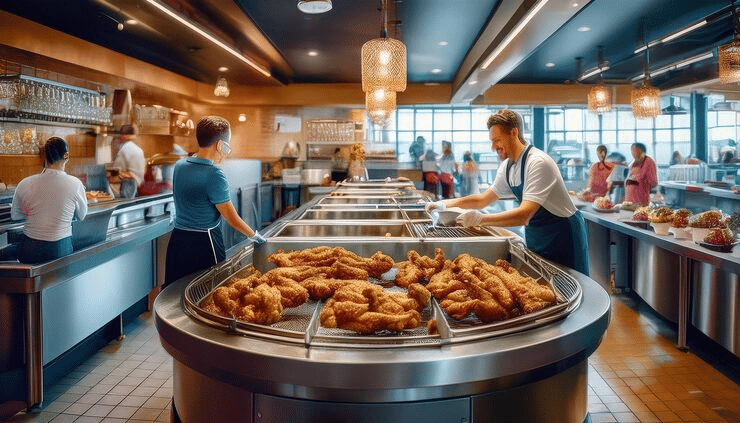
Central Kitchen Fast Food: Complete Setup Guide for Fast Food Chains Leave a comment
Introduction: Why Central Kitchens Are Powering Fast Food Growth
As fast food chains expand across cities and regions, maintaining consistency, speed, and cost control becomes increasingly complex. Multiple outlets cooking independently often leads to uneven quality, higher labor costs, and inefficient procurement. This is where the central kitchen fast food model emerges as a game-changing solution.
A central kitchen allows fast food brands to centralize food preparation, standardize recipes, and distribute semi-prepared or ready-to-cook items to multiple outlets. In this detailed guide, we’ll explain how to plan, design, and equip a central kitchen fast food operation that supports rapid growth while protecting margins and brand consistency.
What Is a Central Kitchen Fast Food Model?
A central kitchen fast food facility is a large-scale production unit where ingredients are processed, cooked, portioned, and packaged before being distributed to multiple outlets.
Key functions include:
- Bulk food preparation
- Standardized cooking and seasoning
- Portion control and packaging
- Cold and frozen distribution
This model reduces the workload at individual outlets while ensuring consistent taste across all locations.
read more : Scaling Fast Food Kitchen Equipment: Guide for Cloud Kitchens
Why Central Kitchen Fast Food Models Are Essential for Scaling
Fast food chains adopt the central kitchen fast food model to overcome common expansion challenges.
Key benefits include:
- Consistency across outlets: Same taste, same texture, every time
- Lower labor costs: Skilled prep work centralized
- Bulk purchasing power: Reduced ingredient costs
- Faster outlet operations: Minimal cooking at store level
Without a central kitchen, scaling often leads to operational inefficiencies and quality drift.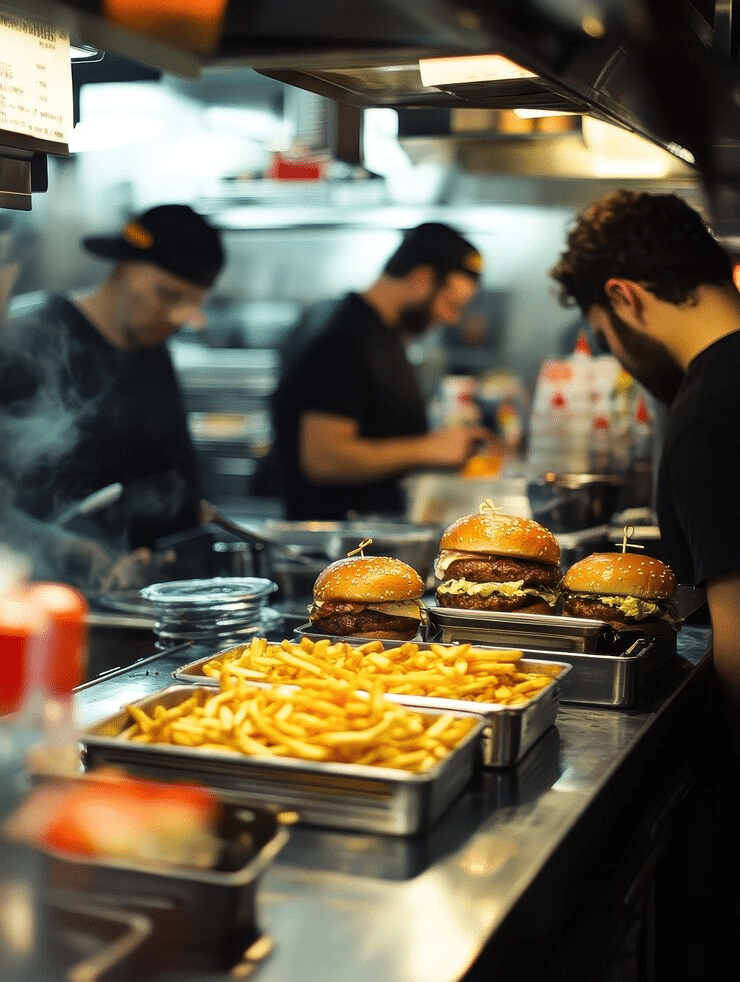
Core Zones in a Central Kitchen Fast Food Setup
1. Receiving & Raw Material Storage
Efficient inbound logistics are critical.
- Dedicated receiving bays
- Ingredient inspection and weighing stations
- Segregated dry, chilled, and frozen storage
A strong receiving system supports smooth central kitchen fast food operations from day one.
2. Preparation & Processing Areas
Preparation zones are where most value is created.
- Commercial food processors for vegetables and sauces
- Meat processing and marination stations
- Dough mixing and portioning systems
Efficient prep workflows reduce waste and boost output in central kitchen fast food facilities.
Cooking Equipment for Central Kitchen Fast Food Operations
3. High-Capacity Cooking Systems
Cooking equipment must handle bulk volumes.
- Tilting kettles for sauces and gravies
- Industrial fryers for batch frying
- Steamers and combi ovens for controlled cooking
These systems are the backbone of central kitchen fast food production efficiency.
Cooling, Portioning & Packaging Systems
4. Food Safety & Shelf-Life Control
Rapid cooling is essential after cooking.
- Blast chillers to pass the danger zone quickly
- Portioning machines for accuracy
- Vacuum sealing or MAP packaging
These steps protect food quality and safety within central kitchen fast food distribution models.
Refrigeration & Cold Chain Infrastructure
5. Storage & Distribution Readiness
Cold chain integrity is non-negotiable.
- Walk-in chillers for fresh items
- Walk-in freezers for frozen inventory
- Temperature-monitored dispatch areas
Strong refrigeration ensures products arrive safely at outlet kitchens.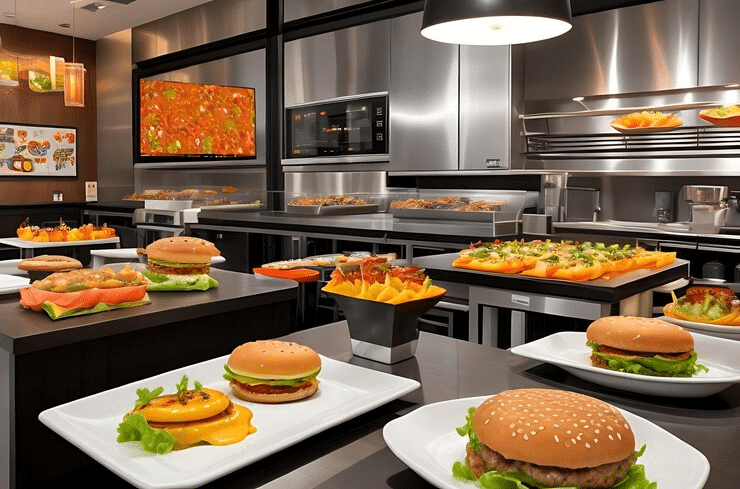
Workflow Design for Central Kitchen Fast Food Efficiency
6. Linear Production Flow
Design should follow a one-direction flow:
Receiving → Prep → Cooking → Cooling → Packing → Dispatch
This minimizes cross-contamination and maximizes throughput in central kitchen fast food facilities.
Technology & Automation in Central Kitchens
7. Smart Systems for Scale
Automation improves reliability.
- Batch cooking controls
- Digital recipe management
- Inventory and traceability software
Technology ensures consistent output as central kitchen fast food operations scale.
Actionable Planning Tips for Central Kitchen Fast Food Setup
- Design for 2–3x future volume
- Standardize recipes before scaling
- Invest in blast chilling early
- Ensure logistics planning matches output
From industry projects, fast food brands with central kitchens reduced outlet labor costs by up to 40%.
read more : Fast Food Restaurant Expansion Equipment: A Complete Equipment Planning Guide
Common Mistakes to Avoid
- Underestimating cold storage needs
- Poor layout causing cross-traffic
- Manual portioning at scale
- Ignoring distribution logistics
Avoiding these mistakes protects your central kitchen fast food investment and long-term scalability.
Conclusion: Central Kitchen Fast Food Models Power Scalable Growth
For fast food chains aiming to expand without sacrificing quality, the central kitchen fast food model offers unmatched efficiency, consistency, and cost control. By centralizing preparation, standardizing processes, and investing in scalable equipment, brands can grow faster with fewer operational risks.
If your fast food chain is planning multi-location expansion, a well-designed central kitchen isn’t just an advantage—it’s a necessity.
👉 Found this guide useful? Share it with your operations team, bookmark it for expansion planning, or comment with your central kitchen challenges. The right setup today defines tomorrow’s fast food success.
Ready to upgrade your kitchen? Explore the best restaurant kitchen equipment in the UAE today and take your business to the next level. Click here to discover top-quality solutions that will streamline your operations and boost efficiency