










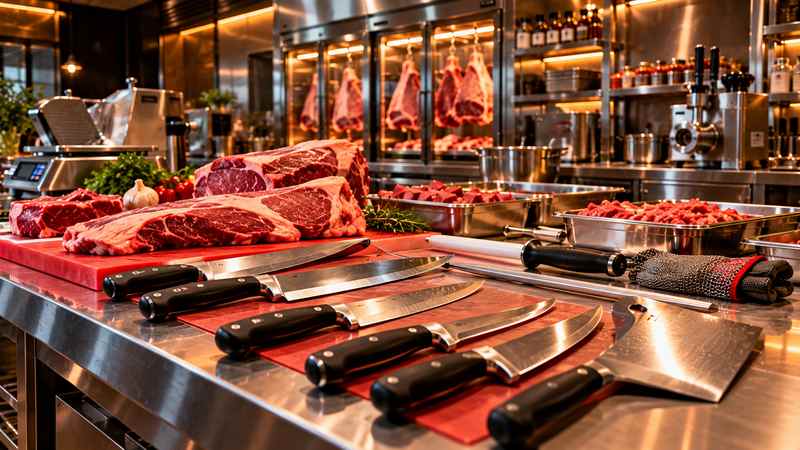
Butcher knives and meat processing tools are essential for butcher shops, restaurants, hotels, catering companies, food production facilities and commercial kitchens. Meat preparation requires accurate cutting, trimming, portioning and handling, so the right knife can improve efficiency, consistency and workplace safety.
For professionals searching for butcher knives UAE, product selection should be based on the type of meat, preparation task, blade length, handle design, hygiene requirements and expected workload. A knife used for trimming beef may not be suitable for deboning poultry, slicing cooked meat or cutting through larger portions.
A complete meat preparation station may include butcher knives, boning knives, cleavers, fillet knives, carving knives, sharpening steels, cutting boards, meat hooks, storage containers and protective equipment.
This guide explains how to choose professional knives and commercial meat tools for restaurants, butcher shops, hotels and food processing operations in the UAE.
Why the Right Butcher Knife Matters
Professional meat preparation requires control and precision. An unsuitable knife can slow down production, create uneven portions and increase fatigue during long shifts.
The right butcher knife can help improve:
- Cutting accuracy
- Meat portion consistency
- Trimming speed
- Deboning control
- Food preparation efficiency
- Staff comfort
- Hygiene procedures
- Knife maintenance
- Workplace safety
A commercial meat knife should be strong enough for the intended task while remaining comfortable and controllable.
What Are Butcher Knives?
Butcher knives are professional cutting tools designed for processing, trimming and portioning meat. They are available in different blade shapes, lengths and levels of flexibility.
Common uses include:
- Trimming fat
- Cutting meat portions
- Separating meat
- Slicing cuts
- Preparing poultry
- Processing fish
- Removing bones
- Carving cooked meat
- Preparing meat for cooking
The correct knife depends on the food product and the specific preparation task.
Types of Butcher Knives UAE Professionals Need
A professional meat preparation station may use several knife types. Each one is designed to perform a different function.
Boning Knives
Boning knives are used to separate meat from bones. They are common in butcher shops, restaurants, hotels and food production kitchens.
Boning knives may have:
- Flexible blades
- Semi-flexible blades
- Stiff blades
- Narrow blade profiles
- Curved blade designs
Flexible Boning Knives
Flexible blades can follow the shape of bones and are useful for poultry, fish and detailed trimming.
Stiff Boning Knives
Stiff blades provide greater control for heavier cuts and larger pieces of meat.
Curved Boning Knives
Curved designs can help follow the contours of joints and bones during trimming.
When selecting a boning knife, consider blade flexibility, length, grip, sharpness and the type of meat processed.
Breaking Knives
Breaking knives are used to separate larger cuts of meat into smaller portions. They are commonly used in butcher shops and professional meat preparation areas.
A breaking knife should provide:
- Strong blade construction
- Comfortable handle
- Good balance
- Sufficient blade length
- Reliable edge retention
- Suitable control for larger cuts
Trimming Knives
Trimming knives are designed for removing excess fat, connective tissue and unwanted portions from meat.
They are useful for:
- Beef trimming
- Lamb preparation
- Poultry trimming
- Portion preparation
- Removing surface fat
- Preparing meat for display
Trimming knives should be sharp, comfortable and easy to clean.
Slicing Knives
Slicing knives are used to create even portions from meat, poultry, ham, roast beef and other products.
They may be used for:
- Cooked meat
- Roast beef
- Ham
- Turkey
- Smoked meat
- Large steaks
- Prepared food
A long, narrow blade can help create smooth and consistent slices.
Carving Knives
Carving knives are used for cooked meat and formal food presentation. Restaurants and hotels may use them for roast service, buffet carving stations and banquet preparation.
A carving knife should provide:
- A sharp edge
- Sufficient blade length
- Comfortable grip
- Good balance
- Smooth cutting performance
Cleavers
Cleavers are heavy-duty tools used for cutting through larger portions, joints and selected bones. They require proper training and a suitable cutting surface.
Cleavers may be used for:
- Poultry
- Meat portions
- Joints
- Large cuts
- Preparation of selected ingredients
Do not use a cleaver on unsuitable surfaces or for tasks outside its intended purpose.
Businesses can explore professional kitchen knives for chef, butcher and food preparation requirements.
Fillet Knives
Fillet knives are designed for fish preparation. Their flexible blades can help remove skin and separate fillets from bones.
They may be required by:
- Seafood restaurants
- Fish markets
- Hotels
- Catering kitchens
- Food processing businesses
Keep fish preparation knives separate from other meat preparation tools where appropriate.
Steak Knives
Steak knives are customer-facing table knives designed to cut cooked meat. They are different from butcher knives and should not be used for heavy preparation work.
Restaurants may need steak knives for:
- Steakhouses
- Grill restaurants
- Hotel restaurants
- Banquet service
- Fine dining
For a complete table setting, explore commercial cutlery.
ICEL Butcher Knives
ICEL butcher knives are designed for professional meat preparation and may be considered by butcher shops, restaurants, hotels and food production businesses.
When evaluating ICEL butcher knives, buyers should review the exact model and intended application.
Important factors include:
- Blade length
- Blade shape
- Flexibility
- Handle colour
- Grip design
- Stainless steel construction
- Edge performance
- Cleaning requirements
- Availability of replacement products
ICEL Knife Handle Colours
Some professional knife ranges use colour-coded handles to help separate preparation tasks. A business may use different colours for:
- Meat
- Poultry
- Fish
- Vegetables
- Bakery products
- General preparation
Colour coding should only be used when the kitchen has a clear and consistent system. Staff should be trained to follow it.
Choosing the Right ICEL Knife

Before purchasing an ICEL knife, confirm:
- The intended meat type
- Required blade flexibility
- Correct blade length
- Handle comfort
- Sharpening method
- Cleaning process
- Storage system
- Quantity needed per station
Do not assume that a knife suitable for one meat preparation task is appropriate for every task.
Commercial Meat Processing Tools
Butcher knives are only one part of a professional meat preparation setup. Additional tools can improve workflow and support safe handling.
Cutting Boards
Meat preparation requires suitable cutting boards that are stable, non-porous and easy to clean.
Use separate boards where appropriate for:
- Raw meat
- Poultry
- Fish
- Vegetables
- Bread
- Cooked food
Colour-coded cutting boards can support better organisation and reduce the risk of cross-contamination.
A professional board should be:
- Food-safe
- Stable
- Durable
- Easy to sanitise
- Resistant to deep cuts
- Suitable for commercial use
Explore professional cutting boards for butcher shops and commercial kitchens.
Meat Hooks
Meat hooks are used for handling and hanging meat in suitable professional environments. They should be strong, corrosion-resistant and easy to clean.
Only use hooks in accordance with the facility’s food safety and workplace procedures.
Meat Saws
Meat saws may be required for larger cuts and bones. The correct type depends on the processing volume and equipment available.
Businesses should consider:
- Blade type
- Safety features
- Cleaning requirements
- Operator training
- Workspace
- Product capacity
Meat Grinders
Meat grinders are used to produce minced meat and prepared meat products. They may be used in butcher shops, restaurants and food production operations.
A grinder setup may require:
- Mincer plates
- Cutting blades
- Feed trays
- Storage containers
- Cleaning brushes
- Replacement components
Tenderisers
Tenderisers are used to prepare selected cuts of meat for cooking. They may be manual or mechanical, depending on the operation.
Meat Mallets
Meat mallets can be used to flatten or tenderise selected cuts. They should be stored and cleaned correctly after use.
Meat Hangers
Meat hangers may be used in suitable preparation, storage or processing areas. Check the product material, load capacity and hygiene requirements before use.
Trimming Scissors
Strong kitchen scissors can help with poultry, meat packaging, trimming and preparation. They should be food-safe, sharp and easy to dismantle or clean where applicable.
Portioning Scales
Scales help standardise meat portions and support food cost control.
They may be used for:
- Steak portions
- Burger patties
- Chicken portions
- Minced meat
- Catering quantities
- Pre-packed products
For a complete food preparation setup, businesses can explore commercial kitchen accessories.
How to Choose Professional Knives UAE Businesses Need

Identify the Preparation Tasks
List the tasks performed in the meat preparation area:
- Deboning
- Trimming
- Breaking
- Slicing
- Carving
- Filleting
- Cutting portions
- Chopping
- Minced meat preparation
Choose each knife according to a specific task.
Consider the Meat Type
Different products may require different blades.
Beef
Beef preparation may require:
- Breaking knives
- Boning knives
- Trimming knives
- Cleavers
- Slicing knives
Poultry
Poultry preparation may require:
- Flexible boning knives
- Poultry knives
- Trimming knives
- Shears
- Small utility knives
Fish and Seafood
Fish preparation may require:
- Fillet knives
- Flexible blades
- Fish scalers
- Fish bone removers
- Seafood scissors
Cooked Meat
Cooked meat service may require:
- Carving knives
- Slicing knives
- Steak knives
- Serving forks
Choose the Correct Blade Flexibility
Blade flexibility affects control and cutting performance.
Flexible blades may be useful for:
- Poultry
- Fish
- Detailed trimming
- Following bones
Stiffer blades may be better for:
- Larger cuts
- Heavy trimming
- Breaking meat
- General butcher work
Select the Right Blade Length
Shorter knives may offer better control for detailed tasks. Longer knives may be more efficient for large cuts and slicing.
Consider:
- Size of the meat
- Work surface
- Storage
- Staff preference
- Cutting motion
- Required precision
Evaluate the Handle
A handle should provide secure grip even when staff wear gloves or work in a wet environment.
Check:
- Grip texture
- Handle shape
- Weight balance
- Colour
- Comfort
- Cleaning access
- Connection between blade and handle
Avoid handles with damaged surfaces or difficult-to-clean gaps.
Check Stainless Steel Quality
Stainless steel is widely used for commercial knives because it can offer strength, corrosion resistance and easy cleaning.
However, the exact performance depends on the steel grade, manufacturing process, blade construction and maintenance routine.
Consider Edge Retention
A knife should maintain a usable edge during the expected workload. Edge performance depends on:
- Blade material
- Cutting surface
- Frequency of use
- Sharpening routine
- Food type
- Staff technique
Knife Sharpening and Maintenance
A sharp knife is easier to control than a blunt knife, but sharpening must be performed correctly.
Sharpening Steels
Sharpening steels can help maintain the edge between professional sharpening sessions. They are useful for chefs, butcher shops and meat preparation staff.
Businesses should use the correct technique and avoid excessive pressure.
Knife Sharpeners
Manual or electric sharpeners may be suitable for selected knives. Check whether the sharpening system is compatible with the blade design.
Professional Sharpening
High-volume operations may use professional sharpening services or a dedicated maintenance schedule.
Avoid Damaged Blades
Remove knives with:
- Cracks
- Chips
- Bent blades
- Loose handles
- Severe rust
- Damaged tips
- Uneven edges
A damaged knife should not remain in service.
Meat Preparation Hygiene
Meat preparation requires strict attention to hygiene and cross-contamination control.
Important practices include:
- Clean knives after each task.
- Sanitise cutting boards according to the kitchen procedure.
- Separate raw and cooked food tools.
- Use colour coding where appropriate.
- Keep knives away from dirty surfaces.
- Store clean knives in dedicated holders.
- Dry products before storage.
- Clean meat processing equipment after use.
- Keep preparation areas organised.
- Remove damaged tools from service.
Staff should follow the facility’s food safety procedures and applicable local requirements.
Knife Storage for Butcher Shops and Restaurants
Correct storage protects both the products and staff.
Magnetic Knife Holders
Magnetic holders can provide accessible storage for selected knives. They should be installed securely and away from splash zones.
Knife Blocks
Knife blocks help protect blades and keep different knife types organised.
Knife Racks
Wall-mounted or countertop racks can be useful in high-volume kitchens.
Knife Cases
Catering companies and mobile butchers may need knife cases for transporting tools between locations.
Separate Meat Preparation Tools
Where appropriate, store tools for meat, poultry, fish and cooked products separately.
Butcher Knives for Restaurants
Restaurants may require butcher knives depending on how much meat is prepared on-site.
A steakhouse may need:
- Boning knives
- Trimming knives
- Carving knives
- Chef knives
- Cleavers
- Meat forks
- Cutting boards
- Steak knives
A restaurant that receives pre-portioned meat may need fewer heavy-duty tools and more preparation and plating knives.
Butcher Knives for Hotels
Hotels may process meat for:
- Breakfast buffets
- Main restaurants
- Banquets
- Room service
- Catering events
- Staff dining
Hotel kitchens should allocate tools according to departments and maintain reserve knives for peak service.
Butcher Knives for Catering Companies
Catering companies may transport knives and meat preparation tools between central kitchens and event venues.
They should prioritise:
- Secure storage
- Protective knife cases
- Lightweight equipment
- Easy cleaning
- Clear tool identification
- Spare blades or replacement tools
- Staff training
Butcher Knives for Food Production
Food production facilities may require larger quantities of consistent knives for repeated processing tasks.
Important considerations include:
- Production volume
- Shift structure
- Blade standardisation
- Handle colour coding
- Cleaning process
- Sharpening schedule
- Replacement stock
- Operator training
How to Buy Butcher Knives UAE Businesses Can Rely On
Choose a Specialist Hospitality Supplier
A supplier familiar with restaurants, hotels, butcher shops and catering businesses can help identify suitable products for different applications.
Compare Product Specifications
Review:
- Blade length
- Blade flexibility
- Handle material
- Steel construction
- Intended use
- Cleaning requirements
- Product weight
- Replacement availability
Request Samples
Before ordering in bulk, test sample knives for:
- Grip
- Balance
- Sharpness
- Flexibility
- Cutting control
- Cleaning
- Storage
- Staff comfort
Standardise Where Possible
Standardising frequently used knives can simplify training, storage, sharpening and replacement.
Buy Replacement Stock
Keep extra knives and cutting tools for:
- Breakage
- Loss
- Sharpening rotation
- New staff
- Additional preparation stations
- High-volume events
Common Buying Mistakes
Choosing a Knife Based Only on Length
Blade length is important, but flexibility, handle design and intended use are equally important.
Using One Knife for Every Task
A single knife may not perform well for deboning, trimming, slicing and carving. Use task-specific tools when necessary.
Buying Household Knives for Commercial Use
Household knives may not withstand the volume and handling required in professional meat preparation.
Ignoring the Cutting Board
A poor cutting surface can damage the knife edge and create an unstable work area.
Neglecting Sharpening
A blunt knife can reduce efficiency and control. Establish a regular sharpening and maintenance routine.
Mixing Raw and Cooked Food Tools
Use appropriate separation procedures to reduce cross-contamination risk.
Buying Without Checking Storage
Knives need safe and accessible storage. Plan the storage system before placing an order.
Forgetting Replacement Availability
Choose knife ranges that can be reordered when products are damaged or added to new workstations.
Frequently Asked Questions
What are the best butcher knives for professionals?
The best butcher knife depends on the task. Boning knives are suitable for separating meat from bones, trimming knives for removing fat, breaking knives for larger cuts and carving knives for cooked meat.
Are ICEL butcher knives suitable for commercial kitchens?
ICEL butcher knives may be suitable for butcher shops, restaurants, hotels and food production facilities when the selected model matches the intended meat preparation task and workload.
What knife is best for deboning meat?
A boning knife is generally designed for deboning. Choose flexible or stiff construction according to the meat type and level of control required.
What is the difference between a butcher knife and a chef knife?
A butcher knife is designed for meat processing tasks such as trimming, deboning and breaking. A chef knife is a more general-purpose preparation tool used for vegetables, herbs, meat and other ingredients.
How often should butcher knives be sharpened?
The frequency depends on usage, blade material, cutting surface, meat type and staff technique. High-volume operations should follow a regular inspection and sharpening schedule.
What cutting board is best for meat preparation?
A stable, food-safe and easy-to-sanitise commercial cutting board is suitable for meat preparation. Separate boards may be used for meat, poultry, fish, vegetables and cooked food.
How should butcher knives be stored?
Store butcher knives in a dedicated rack, magnetic holder, knife block or protective case. Keep blades secure, dry and separated from loose kitchen tools.
What other commercial meat tools are needed?
Depending on the operation, businesses may need meat hooks, cleavers, meat saws, grinders, tenderisers, scales, cutting boards, storage containers and sharpening tools.
Where can I buy professional knives in the UAE?
Restaurants, butcher shops, hotels and catering businesses can source professional knives and commercial kitchen tools from specialised hospitality suppliers such as Horeca Hut.
Final Recommendation
The best butcher knives UAE professionals choose should match the meat type, preparation task, blade design, handle comfort, hygiene procedure and service volume.
A complete professional meat preparation setup may include:
- Boning knives
- Breaking knives
- Trimming knives
- Slicing knives
- Carving knives
- Cleavers
- Fillet knives
- Chef knives
- Meat forks
- Cutting boards
- Meat hooks
- Meat saws
- Meat grinders
- Portioning scales
- Sharpening steels
- Knife storage systems
Before purchasing, evaluate:
- Blade length
- Flexibility
- Handle design
- Stainless steel construction
- Edge maintenance
- Cleaning requirements
- Storage
- Replacement availability
- Staff training needs
For a complete meat preparation and commercial kitchen setup, explore:
- Professional Knives
- Kitchen Accessories and Utensils
- Commercial Cookware
- Professional Cutting Boards
- Commercial Food Storage
- Restaurant Crockery
- Commercial Cutlery
With the right professional knives and meat processing tools, butcher shops, restaurants, hotels and food production businesses can improve cutting accuracy, maintain consistent portions and support safer, more organised preparation throughout the UAE.


